• About us
  • Contact Us
Sunday, September 13, 2026
No Result
View All Result
The World Monitor
  • The World Monitor
  • Middle East
  • Africa
  • World
  • Economy
  • Sports
  • Climate
  • Technology
  • Crypto
  • The World Monitor
  • Middle East
  • Africa
  • World
  • Economy
  • Sports
  • Climate
  • Technology
  • Crypto
No Result
View All Result
The World Monitor
No Result
View All Result
Home Africa

Gaza Death Toll Rises to 40,738

September 1, 2024
Gaza Death Toll Rises to 40,738

Gaza Death Toll Rises to 40,738

Share on FacebookShare on TwitterShare on Whatsapp

The death toll in Gaza has surged to 40,738 as a result of ongoing Israeli airstrikes, according to a statement released by the Palestinian Ministry of Health on Sunday. Since the escalation of violence on October 7, more than 94,154 people have been injured.

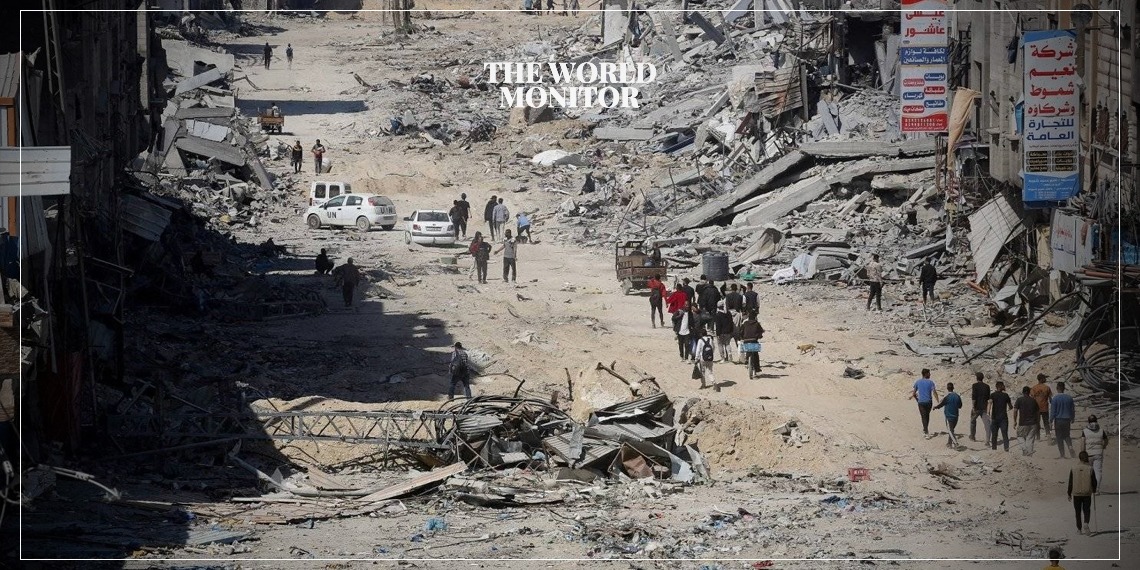
The Ministry’s statement highlighted the devastating impact of the conflict, noting that Israeli forces committed three massacres against families in Gaza within the past 24 hours alone. These attacks resulted in 47 deaths and 94 injuries, with victims being brought to hospitals amidst the chaos.

As the conflict reaches its 331st day, the situation remains dire. The Ministry reported that many victims are still trapped under rubble or lying in the streets, with rescue and medical teams unable to reach them due to the relentless bombardment.

The current escalation in Gaza began in early October, marking one of the deadliest periods in the long-standing Israeli-Palestinian conflict. The violence erupted following a series of events, including heightened tensions in Jerusalem and the West Bank, leading to a significant military response from Israel. The Israeli government has stated that its airstrikes are aimed at eliminating Hamas targets and halting rocket fire into Israeli territory.

However, the scale of destruction and the high civilian casualty rate in Gaza have drawn international condemnation. Human rights organizations and global leaders have called for an immediate ceasefire, urging both sides to return to negotiations to prevent further loss of life.

The Gaza Strip, a densely populated area home to over two million Palestinians, has been under a blockade by Israel and Egypt since Hamas took control in 2007.

This blockade has severely restricted the movement of people and goods, exacerbating the humanitarian crisis in the region. The recent conflict has only deepened the suffering, with the infrastructure in Gaza, including hospitals and schools, being severely damaged or destroyed.

The rising death toll underscores the urgent need for a resolution to the conflict, as the humanitarian situation in Gaza continues to deteriorate. The international community remains divided on how to address the crisis, with ongoing debates at the United Nations and other diplomatic forums.

In light of the ongoing violence, the Palestinian Ministry of Health has called for immediate international intervention to halt the attacks and provide humanitarian aid to the besieged population.


Tags: GazaIsrael
Next Post
Algeria Joins BRICS New Development Bank

Algeria Joins BRICS New Development Bank

Leave a Reply Cancel reply

Your email address will not be published. Required fields are marked *

Recommended

Egypt Rejects Ethiopia-Somaliland Agreement Egyptian President Abdel Fattah el-Sisi stated on Sunday that Egypt will not allow any threat to Somalia or its security, and that the agreement between Ethiopia and Somaliland is rejected by all. Sisi is set to hold talks with Somali President Hassan Sheikh Mohamud about ways to enhance bilateral relations and regional situations between the two countries during his reception at the Ittihadiya Palace. President el-Sisi described the agreement as unacceptable and affirmed Somalia's right to defensive support within the framework of the Arab League charter, saying, "We will not allow a threat to the security of our brothers." On his part, the Somali President stated that the authorities would not allow the presence of foreign forces on their territory without an appropriate agreement. Earlier this year, the separatist region of Somaliland signed a memorandum of understanding with Ethiopia, granting Addis Ababa the right to use a 20-kilometer coastal front of Somali territory for 50 years. The Somali government condemned this agreement, stating it would counter it with all legal means and considering it an "aggression and blatant violation of its sovereignty." After two days of its signing, the Republic of Egypt announced its rejection of the memorandum, with the Egyptian Ministry of Foreign Affairs emphasizing the full respect for the unity and sovereignty of the Federal Republic of Somalia over its entire territory. Arab foreign ministers held an emergency meeting to support Somalia, where they confirmed that the Ethiopia-Somaliland agreement is a "blatant coup against the established Arab, African, and international constants, and a clear violation of international law." Ethiopian Minister of Energy and Water advisor Mohammed Al-Arrousi affirmed that the memorandum of understanding between Addis Ababa and the Somaliland region does not violate Somali law or sovereignty, describing it as a preliminary memorandum "that has not yet been implemented." Egyptian Ambassador Mohamed El-Orabi, President of the Egyptian Council for Foreign Affairs, stated on Friday that the Ethiopia-Somaliland agreement threatens the entire Horn of Africa region. In his statements to the "Arab World News Agency," he accused Ethiopia of seeking to dominate the Horn of Africa and impose its will on the region's countries through its unilateral actions and agreement with the Somaliland region. The agreement between Ethiopia and Somaliland, which is a breakaway region of Somalia, has raised tensions in the Horn of Africa. This deal, signed at the beginning of 2024, allows Ethiopia to use Somaliland's Red Sea port of Berbera. Ethiopia, a landlocked country, currently relies mainly on neighboring Djibouti for its maritime trade. This agreement is significant because Ethiopia would be the first country to recognize Somaliland as an independent nation, as per the statement of Somaliland President Muse Bihi Abdi. This deal has been met with opposition from Somalia, which considers Somaliland as part of its territory. The Somali government has condemned the agreement, stating that it would counter it with all legal means, considering it as an aggression and a blatant violation of its sovereignty. Furthermore, Somalia regards this deal as a violation of its territorial integrity and has warned Ethiopia against interfering in its affairs.

570 Ukrainian Soldiers Killed in Recent Operations

3 years ago
145,000 People Flee to Sudan's White Nile Region

145,000 People Flee to Sudan’s White Nile Region

3 years ago

Popular News

  • Tunisian President Unveils Regional Leadership Changes

    Tunisian President Unveils Regional Leadership Changes

  • France to Tighten Immigration Laws

  • Germany Proposes Ban on Semi-Automatic Firearms

  • Irish Women’s Basketball Team Refuses to Shake Hands with Israeli Team

  • North Korea Fires Missiles into Japan’s Economic Waters

Follow us

"Connecting the World to the Heartbeat of Middle East and Africa – Your Trusted Source for News and Insights."

  • The World Monitor
  • Middle East
  • Africa
  • World
  • Economy
  • Sports
  • Climate
  • Technology
  • Crypto

ABOUT US

CONTACT US

Privacy Policy

  • About us
  • Contact Us

© 2023 THE WORLD MONITOR

No Result
View All Result
  • Home
  • Africa
  • World
  • Economy
  • Climate
  • Sports
  • Crypto
  • Technology

© 2023 THE WORLD MONITOR