
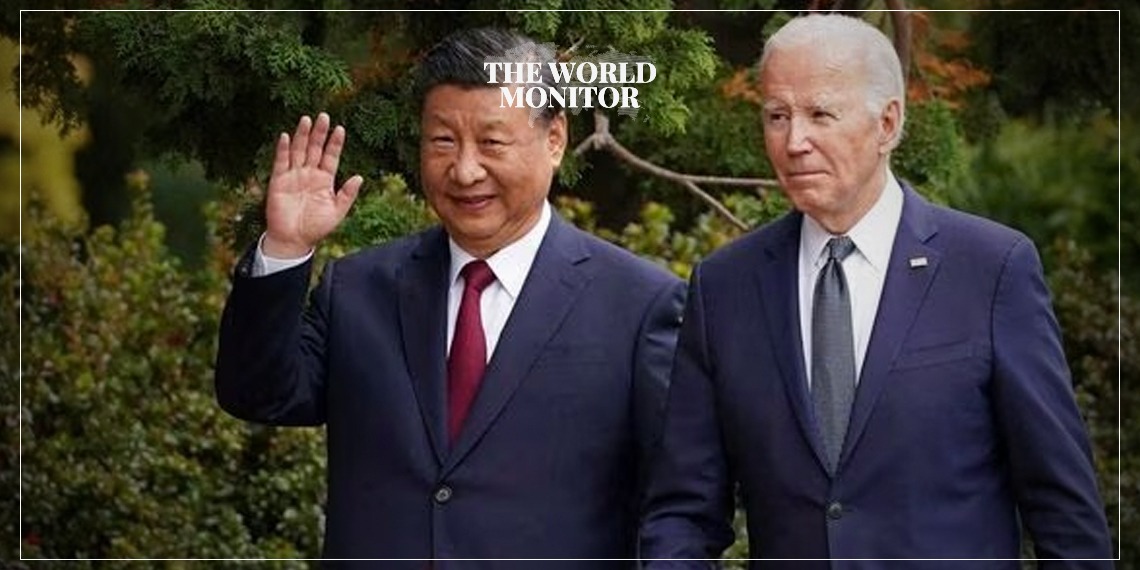
President Biden and Chinese leader Xi Jinping engaged in a conversation on Tuesday morning, marking their first discussion since November.
The call reflects ongoing efforts by both superpowers to navigate their complex relationship and explore areas of cooperation amidst simmering tensions.
Against a backdrop of disputes encompassing trade, regional issues like the South China Sea and Taiwan, as well as broader geopolitical dynamics involving Russia, the leaders exchanged views on a range of topics. These included military cooperation, counternarcotics efforts, Taiwan, and China’s relationship with Russia.
A statement from the White House characterized the discussion as candid and constructive, highlighting both areas of cooperation and points of difference. Similarly, China’s Foreign Ministry confirmed the meeting, with Xi emphasizing the importance of prioritizing peace and stability in U.S.-China relations.
The call follows a breakthrough summit in November, during which Biden and Xi agreed to restart cooperation on counternarcotics and artificial intelligence regulation. The reopening of critical communications between the two countries’ militaries also occurred, easing concerns of potential military escalation.
While both leaders reiterated their respective stances on Taiwan, with Biden advocating for peace and stability and Beijing opposing any support for the island’s independence, China acknowledged recent progress in the relationship. However, it cautioned against protectionist U.S. trade measures that could jeopardize bilateral relations.
Despite some warming in specific areas, the overall nature of the U.S.-China relationship remains complex. Compared to tensions in 2022, the current dialogue signifies a nuanced approach to managing differences and fostering cooperation. The recent conversation contrasts with the heightened tensions following previous events, such as Nancy Pelosi’s visit to Taiwan in July 2022, which prompted provocative military actions by Beijing and strained communication between the two governments.