More than 800,000 children in Yemen have been able to continue their education thanks to the support provided by the King Salman Humanitarian Aid and Relief Centre, according to the United Nations Children’s Fund (UNICEF).
This support included school supplies, bags, and incentive bonuses.
Data from the Education Cluster in the UN-led Relief Coalition shows that 2.66 million children were unable to access education, including 1.41 million girls and 1.25 million boys.
This figure represents nearly a quarter of Yemeni children of school age, estimated at 10.8 million.
UNICEF stated in a press release that 827,000 children received support to access quality education “thanks to a contribution of $6.2 million from the King Salman Humanitarian Aid and Relief Centre.”
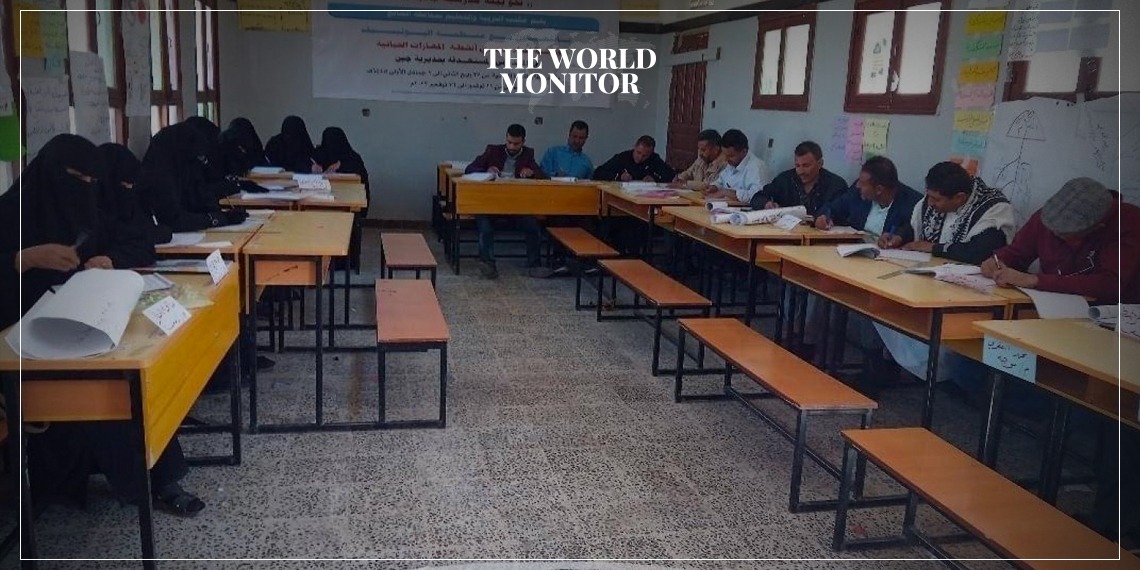
The educational support program, implemented by the organization, aims to ensure access to formal and informal education opportunities for vulnerable girls and boys.
This program, funded by the King Salman Centre, helped over 527,000 children attend national final exams for the academic year 2022-2023.
Additionally, it provided 300,000 others with school bags and recreational supplies “to motivate and encourage them to return to school and alleviate the financial burden associated with education on families.”
According to UNICEF, Saudi funding has enabled them to improve teaching practices within classrooms by training 7,520 teachers in 17 Yemeni governorates.
They also purchased and distributed sanitation supplies for a total of 71,956 children and 120 schools.
Additionally, nearly 4.9 million individuals, including caregivers, were reached through five awareness campaigns. Approximately 26,000 members of community mobilization and leadership groups and 2,500 families were also reached.
Peter Hawkins, UNICEF Representative in Yemen, praised the contribution of the King Salman Centre in responding to the educational needs of vulnerable girls and boys in Yemen.
He stated that “one in four children of primary school age is currently out of school,” while learning outcomes for those able to attend school do not correspond to their ages.
Furthermore, UNICEF confirmed that malnutrition is a life-threatening condition, especially for young children, requiring medical assistance from qualified staff and comprehensive treatment.
The organization stated that an estimated 2.7 million children in Yemen suffer from acute malnutrition, including around 600,000 severely acutely malnourished children. Most of these children live in remote rural areas and displacement camps.
In this context, volunteers play a vital role in saving lives within local communities, often being the only means for Yemeni families living in remote areas to seek and obtain qualified medical assistance. They now constitute a valuable asset to Yemen’s healthcare system, undergoing training by UNICEF and health offices in various governorates.
According to UNICEF, these volunteers maintain strong relationships with the communities they serve, serving as a link between communities and the healthcare system, building trust, raising awareness, encouraging and assisting people in seeking medical assistance upon identifying cases of malnutrition or other critical conditions during their services.
These social volunteers undertake the task of treating malnutrition among young children and increasing awareness within their local communities about malnutrition, as well as the importance of vaccination and hygiene.
They regularly visit households to weigh children and provide advice on improving nutrition and hygiene practices, as well as the importance of immunization, according to the organization.