
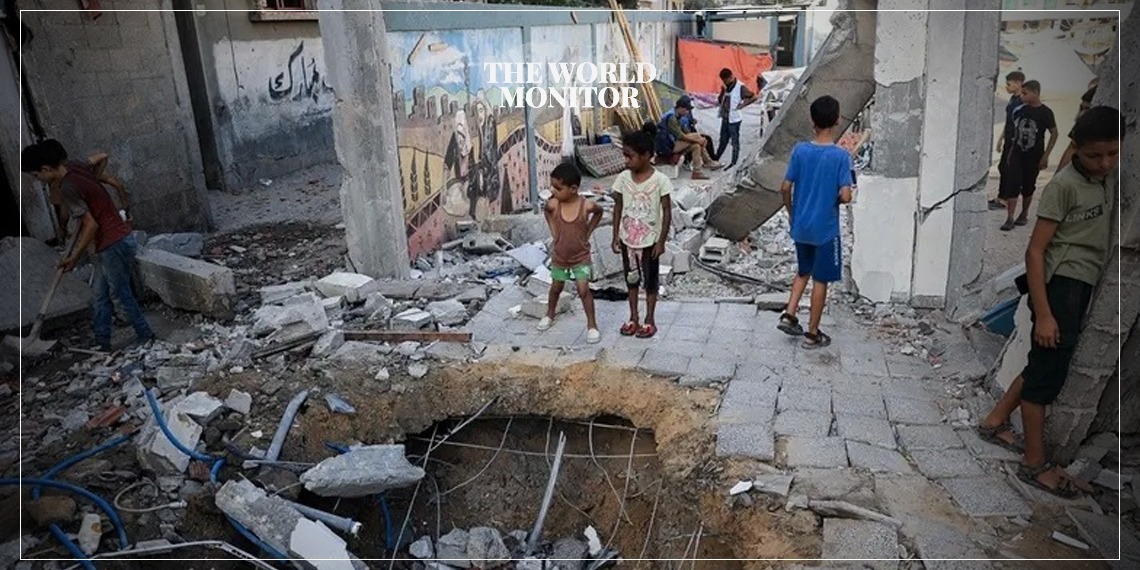
Ceasefire talks in Gaza continue today, Thursday, after the first day in the Qatari capital, Doha, with expectations set on the outcomes of the second day’s discussions in the Egyptian capital, Cairo. Amid these talks, Israeli Prime Minister Benjamin Netanyahu affirmed his commitment to securing a ceasefire in Gaza, conditioned on full compliance with the terms set by Tel Aviv.
Netanyahu’s office stated that the U.S. Middle East envoy was informed that commitment remains contingent on the respect for Israel’s red lines.
Imminent Agreement on Principles A senior Israeli official indicated that Tel Aviv is close to reaching an agreement on the principles of the deal, noting that the final decision on the agreement with Hamas rests solely with Prime Minister Benjamin Netanyahu. Israeli Channel 13 added that today’s Israeli cabinet meeting would discuss the exchange deal and the outcomes of the Doha meeting.
The negotiations, moving between Cairo and Doha, aim to bridge the gaps on issues still disputed between Israel and Hamas. Yesterday’s meeting involving Qatari, American, Israeli, and Egyptian delegations worked towards aligning perspectives to reach a ceasefire agreement as soon as possible. New understandings were also reached about reopening the Rafah crossing under Egyptian conditions.
These conditions include the absence of Israeli forces at and around the crossing. However, sources from Al Arabiya and Al Hadath indicated that there are still unresolved points regarding the Palestinian entities that will operate the Rafah crossing, which is set to open at the end of this month following a complete Israeli withdrawal.
The sources also mentioned that Israel is nearing approval to withdraw from Rafah, excluding the idea of international parties managing it.
Renewed Life in Negotiations Amid Disagreements Negotiations have revived after Hamas relinquished its demand for Israel to commit to a permanent ceasefire, following a modified version of the American proposal.
However, there are still contentious points between the parties concerning guarantees, commitments to abide, the names and numbers of prisoners, and Israeli withdrawal from the sector, as well as post-war arrangements.
Despite these challenges, indications suggest Tel Aviv’s desire to finalize the deal, as reported by Israeli media from a senior official. The negotiations are expected to be tough, according to the Yedioth Ahronoth newspaper, which quoted sources familiar with the negotiations that this round would be complex and could take several weeks.
Cautious American Optimism John Kirby, spokesperson for the National Security at the White House, expressed cautious optimism about the Gaza ceasefire talks on CNN last Wednesday. He mentioned the possibility of narrowing the gaps between the sides.
In response to whether a ceasefire agreement was near, Kirby stated, “We are cautiously optimistic that things are moving in the right direction.”
He continued, “There are still gaps between the sides, and we believe these can be narrowed, which is what Brett McGurk (U.S. Special Envoy to the Middle East) and CIA Director Bill Burns are currently attempting.”
The war erupted on October 7 following an unprecedented attack by Hamas on southern Israel, resulting in 1,195 deaths, mostly civilians, according to official Israeli figures. Of the 251 people abducted during the attack, 116 are still held captive in Gaza, including 42 who have died, according to the Israeli army.
Israel responded with a devastating war in the Gaza Strip, resulting in at least 38,295 deaths, the majority of whom were civilians, according to the Gaza Health Ministry.