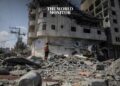

Syria has strongly condemned Israel’s recent attack on civilians in Lebanon, labeling it as a “bloody terrorist crime” and expressing full solidarity with the Lebanese people.
In a statement released by the Syrian Foreign Ministry, the country accused Israel of using advanced technology to carry out a cyber-attack targeting communication systems in Lebanon, calling it an unprecedented and violent act against civilians.
The statement, reported by the Syrian Arab News Agency (SANA), emphasized Syria’s support for Lebanon’s right to defend itself against aggression.
The ministry reiterated its condemnation of Israel’s actions, which it described as a calculated move to escalate conflict in the region and intensify the violence.
Syria’s response comes amid growing tensions in the region, with fears of a broader conflict involving multiple countries.
The Lebanese-Israeli border has historically been a hotspot for clashes, and the recent attacks further strain an already fragile situation.
Israel’s use of cyberwarfare, particularly in targeting civilian infrastructure, marks a shift in the methods employed in the ongoing conflict.
The Syrian government urged the international community to unequivocally denounce Israel’s actions, calling for a united response to what it described as a violation of international law and human rights.
Syria expressed confidence in Lebanon’s ability to resist Israeli aggression and called for global solidarity with the Lebanese people.
The incident is part of a larger pattern of violence and unrest in the Middle East, where territorial disputes and military confrontations continue to disrupt the lives of millions.
Israel and Hezbollah, a Lebanese militant group, have been in a state of near-constant tension, with periodic escalations of violence. The recent attacks highlight the volatile nature of the region and the risk of further escalation.
As Syria stands firmly behind Lebanon, the situation underscores the complexity of Middle Eastern geopolitics, where national sovereignty, military power, and international diplomacy often collide.