
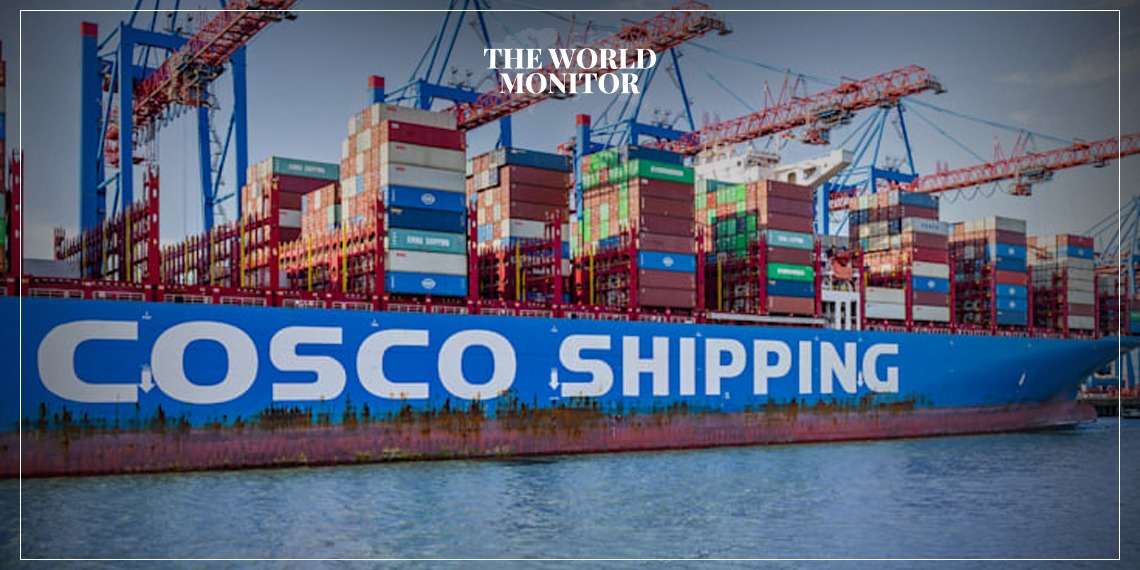
COSCO Shipping, a leading Chinese state-owned shipping company, has reportedly halted its visits to Israeli ports.
This decision has significant implications for global trade, given that COSCO controls approximately 11% of worldwide trade volume.
While COSCO faces minimal threats in the Red Sea, its Chinese identity and China’s connections with Iran, a supporter of Yemen’s Houthi rebels, are believed to be driving factors behind this move.
The decision has ripple effects on trade routes between the Far East and Israel. Notably, COSCO collaborates with Israel’s ZIM shipping line.
With COSCO reducing its involvement, ZIM will likely need to increase its fleet on Far East routes. This adjustment could result in escalated shipping costs due to ZIM’s potential fleet shortage.
Additionally, the decision impacts Haifa Bayport, managed by another state-owned enterprise, SIPG. The port heavily relies on COSCO’s frequent ship visits.
Despite threats from the Houthi rebels to target vessels sailing to Israel, the low likelihood of the Houthis attacking a state-affiliated Chinese company raises questions about the rationale behind the firm‘s move. International shipping entities remain puzzled as COSCO has not formally communicated its reasons.
A precursor to COSCO’s action was a recent announcement by its Hong Kong-based affiliate, OOCL, which suspended its voyages to Israel citing “operational challenges.”
This maneuver aimed to ensure safe passage through the Red Sea, away from Houthi disruptions but drew widespread criticism. Eventually, OOCL reversed its decision, echoing a similar move by Singapore’s ONE shipping line.
It is worth highlighting that COSCO Shipping, which was established in January 2026, is one of the world’s largest shipping companies
Meanwhile, COSCO was founded in 1961 as a Government-owned shipping and logistics services supplier company.