
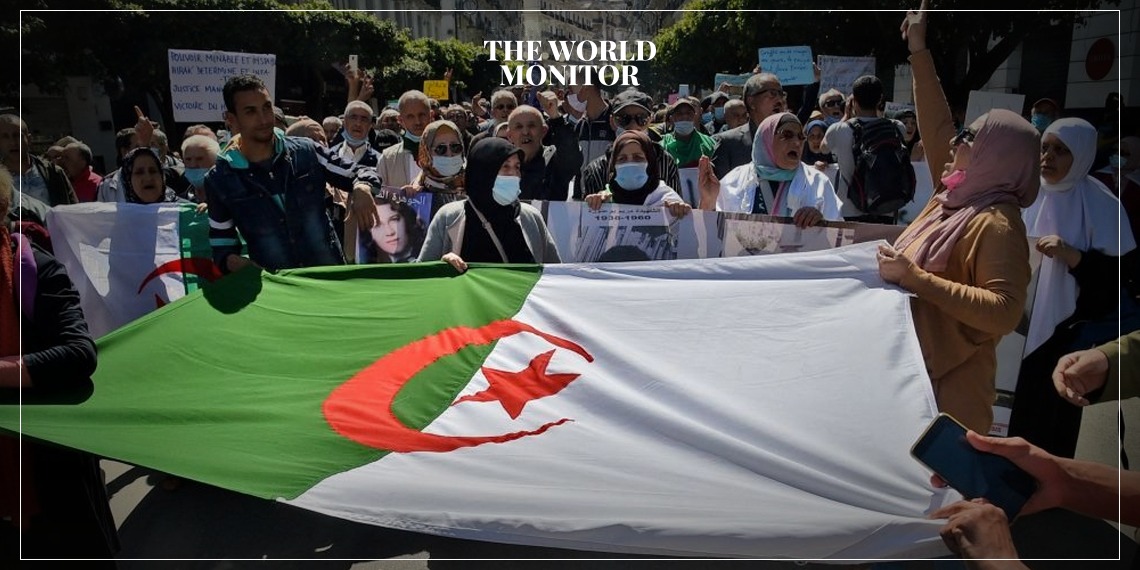
Algerian Prime Minister, Nidir Al-Arbawi, voiced concern over the violation of basic human rights in occupied Palestine due to what he termed as a genocidal war waged by the Israeli occupation against the Palestinian people.
He criticized the international system’s inability to enforce human rights standards in the face of these crimes.
His remarks were made during his representation of Algeria’s President, Abdelmadjid Tebboune, at the opening of the 6th African Judicial Dialogue of the African Court on Human and Peoples’ Rights held in Algiers.
Al-Arbawi stated that every bombing by the Israeli military in Gaza results in the collapse of values and principles of international humanitarian law.
He recalled the Algerian President’s call for global freedom fighters, legal experts, human rights organizations, and bodies to file lawsuits against Israel at the International Criminal Court and other international human rights organizations, particularly for crimes committed in Gaza.
The Prime Minister urged the international community to take responsibility for ensuring international protection for the Palestinian people and to work towards ending decades of impunity for crimes committed against them.
Regarding African affairs, Al-Arbawi affirmed Algeria’s constant attention in its comprehensive approach to addressing multi-dimensional crises in the region through prioritizing political and diplomatic solutions and supporting developmental efforts.
He stressed that the root causes of tensions, the rise of terrorism, violent extremism, and transnational organized crime, are entrenched poverty and the lack of promising development prospects.
Al-Arbawi also mentioned the close link between the right to development and addressing deteriorating situations in many regions of Africa, especially in the Sahel area.
The dialogue, attended by heads of supreme courts from African Union member states and representatives of regional and quasi-judicial bodies and other African Union organs, aims to provide a platform to discuss challenges and opportunities related to integrating regional and international judicial decisions into national courts across Africa.
The event, conducted in a consultative and participatory manner, will continue until Wednesday, following the decision by the African Union‘s Executive Council to hold continental judicial dialogues every two years.