
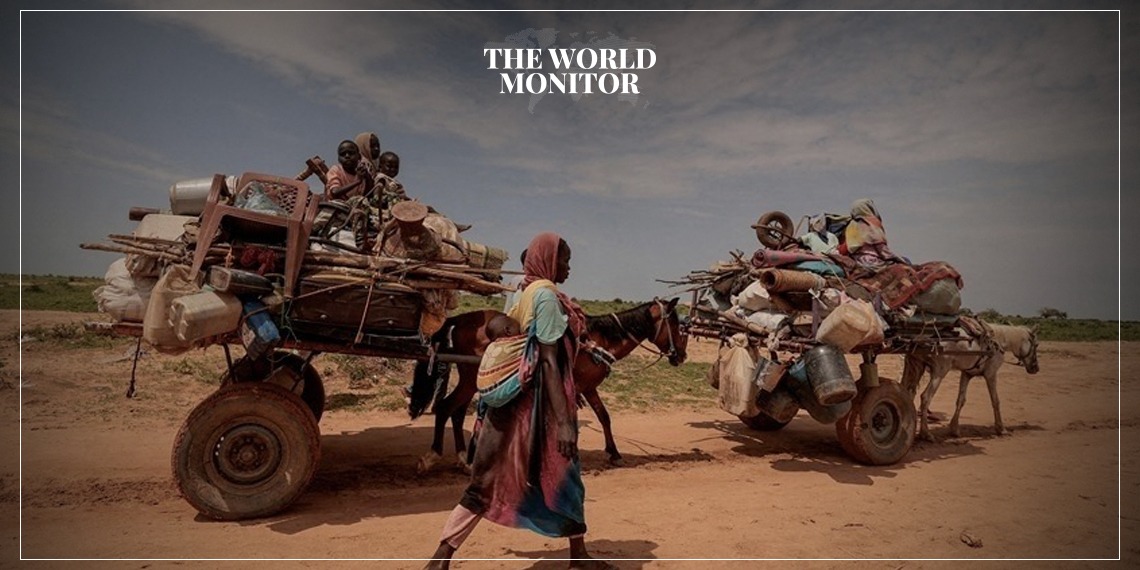
NGOs are raising alarms about the “forgotten crisis” in Sudan, where millions are facing the threat of famine following a massive displacement crisis. Shaker Al Hassan, an internally displaced person and employee of Care International, describes fleeing from Khartoum to Wad Madani with his family due to the conflict that erupted in April between the Sudanese army and the Rapid Support Forces. However, Wad Madani, transformed into a “humanitarian hub” by the UN, also came under attack, forcing Hassan and many others to flee again.
Currently residing in Kassala, close to the Eritrean border, Hassan witnesses a continuous influx of exhausted, hungry, and sick displaced people forced into temporary shelters without resources. The displaced populations are battling epidemics like dengue fever and cholera, highlighting the unprecedented needs of the Sudanese people amidst this “forgotten catastrophe.”
The conflict, which started on April 15 between the Sudanese army and the Rapid Support Forces, has resulted in thousands of civilian deaths, including a significant number in Darfur as reported by UN experts.
Approximately eight million people, half of them children, have been displaced. The UN estimates that over half of Sudan’s population, exceeding 48 million, now requires assistance, with 18 million facing severe food insecurity.
William Carter of the Norwegian Refugee Council notes the dire situation for those who have been without work and income for ten months, leading to extreme hardship due to inflation and skyrocketing prices. Carter, recently returned from Darfur, expresses shock at the “food emergency” situation there.
Solidarités International warns of an impending famine if no action is taken, emphasizing that this could be the largest humanitarian crisis Sudan has ever faced. Médecins Sans Frontières reports that children in Darfur’s Zamzam camp are dying at alarming rates due to severe malnutrition, with those still alive at risk of dying within weeks if untreated.
UNICEF warns that without additional international support, tens of thousands of children in Sudan could die. CARE International’s Deepmala Mahla fears the loss of an entire generation, and the UN’s humanitarian coordinator in Sudan, Clementine Nkweta-Salami, describes witnessing “absolute evil,” with children caught in crossfire and girls raped in front of their mothers.
Alice Ferrier of Première Urgence Internationale highlights the disparity in international aid compared to other crises, like Ukraine, indicating that the Sudanese crisis is entirely overlooked. In February, the UN appealed for $4.1 billion to meet the Sudanese people’s humanitarian needs, but only half of the required funding has been received for 2023.