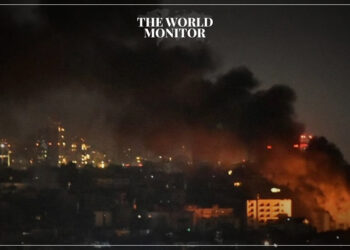

Kataib Hezbollah, an Iraqi militia, reported the loss of five members in Jurf al-Sakhar, a region south of Baghdad, due to U.S. military strikes.
These strikes, according to U.S. officials, were a direct response to the attacks on American forces by Iran-aligned militias in the area.
The U.S. executed two rounds of airstrikes on Iraqi soil on consecutive days, marking a notable shift in its approach in response to numerous recent assaults.
These assaults, commencing from October 17, are reportedly in retaliation to U.S. support for Israel against Hamas in Gaza.
The U.S. fighter jets specifically targeted Kataib Hezbollah‘s operational center and command facilities near Al Anbar and Jurf Al-Sakhar. An Iraqi defense source confirmed at least three fatalities and seven injuries within Kataib Hezbollah from these overnight U.S. operations.
Kataib Hezbollah is a component of Iraq’s Popular Mobilisation Forces (PMF), a collective of mainly Shi’ite militias established in 2014 to combat the Islamic State, and now an officially recognized security entity by the Iraqi government.
This U.S. military action represents a significant shift in American strategy in Iraq, a country where political sensitivities have previously led to a more cautious U.S. approach.
The need for closer cooperation with Baghdad, especially in financial matters, and the desire to counterbalance Iran’s influence, have influenced U.S. actions until now.
Iraqi Prime Minister Mohammed Shia Al-Sudani, with limited sway over some Iran-backed factions, relies on their support, which was crucial for his rise to power a year ago. These factions now hold substantial influence within his coalition, though they exhibit varying degrees of agreement on the extent of their aggression.