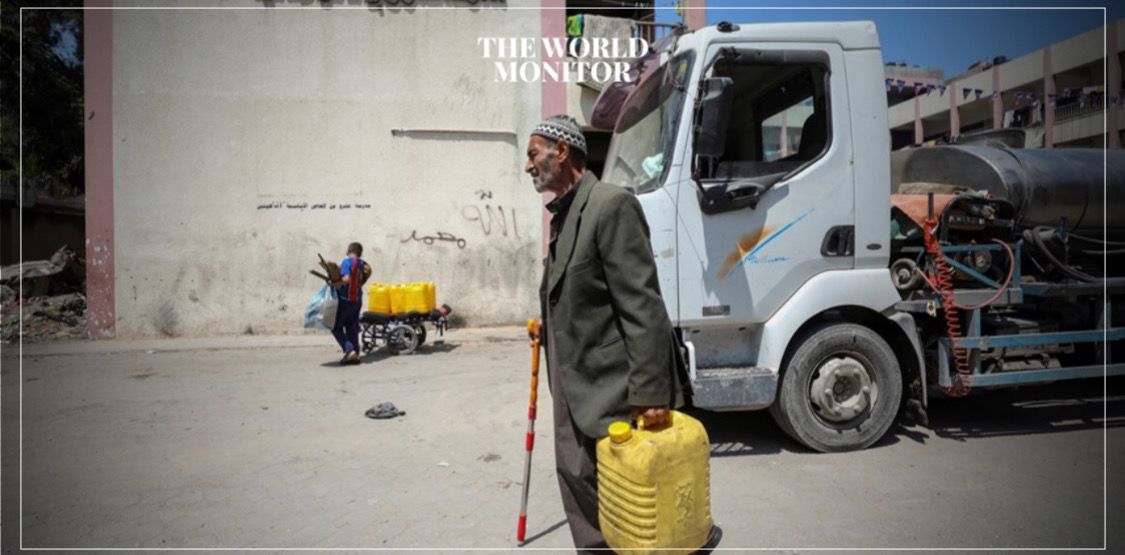
UNRWA condemned today, Sunday, the provision of only one liter of water per person per day to Palestinian refugees instead of the minimum of 15 liters, a natural human necessity.
The United Nations Relief and Works Agency for Palestine Refugees (UNRWA) said in a statement that “displaced persons in Gaza receive only one liter of water per day, increasing their daily burdens, which worsen with rising temperatures.”
UNRWA added in its statement, “What more must they endure? Death, hunger, illness, displacement, and now living in greenhouse-like structures under scorching heat.”
The statement pointed out that UNRWA has received reports of at least two children’s deaths due to the heatwave in the Gaza Strip, noting that children bear the greatest cost and calling for an immediate cessation of hostilities.
Gaza witnessed a significant escalation in conflict starting from October 7, with intense exchanges of fire between Israeli forces and Palestinian militant groups. The conflict resulted in extensive damage to infrastructure, displacement of civilians, and loss of lives. The war exacerbated an already dire humanitarian situation in Gaza, with widespread shortages of essential goods and services, including food, water, and medical supplies. Thousands of Palestinians were displaced from their homes, seeking shelter in overcrowded UNRWA schools and other makeshift facilities.
Despite the challenging circumstances, UNRWA plays a crucial role in providing emergency assistance to Palestinian refugees affected by the conflict in Gaza. This includes distributing food aid, water, shelter materials, and medical supplies to displaced families. It continues to operate schools and health clinics in Gaza, ensuring access to education and healthcare services for refugee communities. The agency works to support the rehabilitation of damaged infrastructure and provides temporary shelter to displaced families through its network of schools and community centers. It advocates for the rights and needs of Palestinian refugees in Gaza on the international stage, while also coordinating closely with other UN agencies, NGOs, and local authorities to deliver aid effectively.