Turkey has expressed its readiness to increase its natural gas exports to the European Union (EU), but it seeks long-term commitments that justify the necessary infrastructure investments.
Additionally, Turkey wants to avoid any complex swaps the EU might impose to circumvent reliance on Russian gas.
Europe is striving to secure alternative gas supplies to replace Russian flows that transit through Ukraine.
One option could involve Turkey redirecting its imports of Azerbaijani gas to Europe, meaning Ankara would need to purchase additional Azerbaijani gas to replace its Russian imports. Turkey is also keen on expanding its gas exports via Bulgaria.
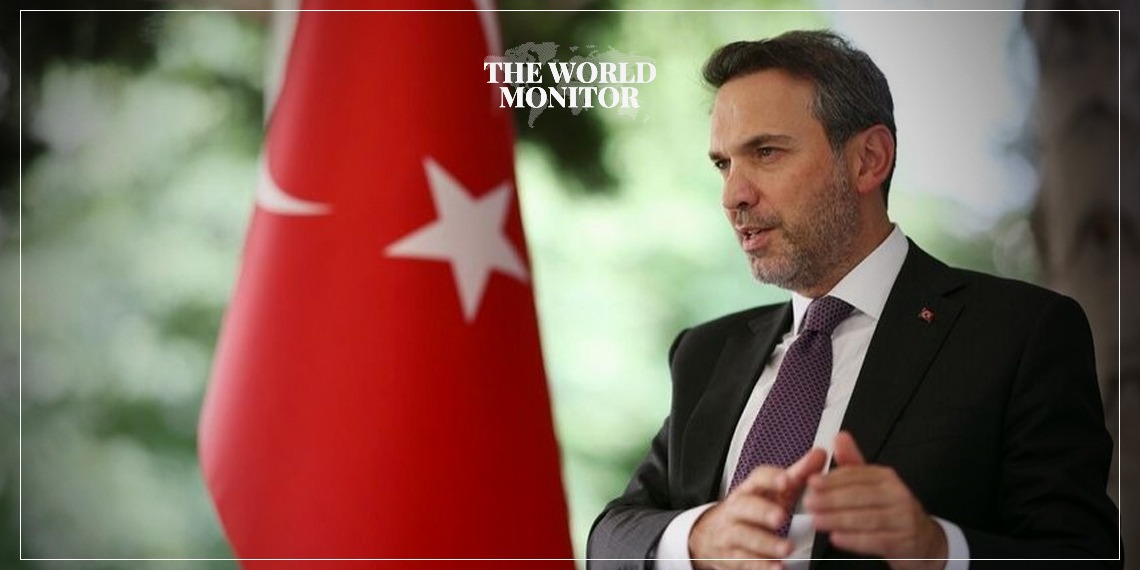
In an interview with Bloomberg in Ankara, Turkish Energy Minister Alparslan Bayraktar stated, “I need a guarantee from you for 10 years or 15 years, whatever the period, you have to provide something,” describing the proposal for a gas swap with the EU as “complicated.”
Bayraktar added, “These discussions are being held without knowledge of the capacity and market,” emphasising the need to increase the interconnection capacity between Turkey and Bulgaria, which currently receives only half of the 7 billion cubic meters Turkey can technically supply annually.
The Turkish minister revealed that Ankara might collaborate with Azerbaijan’s state energy company SOCAR to boost supplies to 10 billion cubic meters but wants assurances regarding European demand.
His comments highlight the diplomatic struggle within the negotiations to replace Russian gas flows to Europe, where the agendas of buyers and sellers often diverge.
Energy Aspects Ltd, a consultancy firm, noted in a recent memo, “We believe the political and practical barriers are too high to replace Russian gas flowing through Ukraine with Azerbaijani gas.”
The firm added that “Azerbaijan will struggle to increase its domestic production to provide any significant additional supplies to Europe next year.”
Bayraktar pointed to deals like the one Turkey struck last year with Bulgaria to import up to 1.5 billion cubic meters of liquefied natural gas (LNG) and re-export it westwards as a more “flexible” solution.
However, this solution might not sit well with Brussels, as the EU’s antitrust authority is investigating the agreement over competition concerns.
Meanwhile, Bulgaria, which under the agreement has to pay nearly $500,000 a day to access the Turkish gas network, is looking to renegotiate to allow a third party to use the rights due to the high costs.
Turkey aims to become a regional gas hub and has already invested heavily in new storage and LNG facilities, as well as exploration and production investments in the Black Sea.
Although it still relies almost entirely on imports to meet domestic demand, it signed several gas export contracts with Romania, Moldova, and Hungary last year, albeit in small quantities.
Turkey is also considering importing gas from Turkmenistan through swaps via neighbouring Iran, according to Bayraktar, who hopes to reach an agreement during a visit later this month.