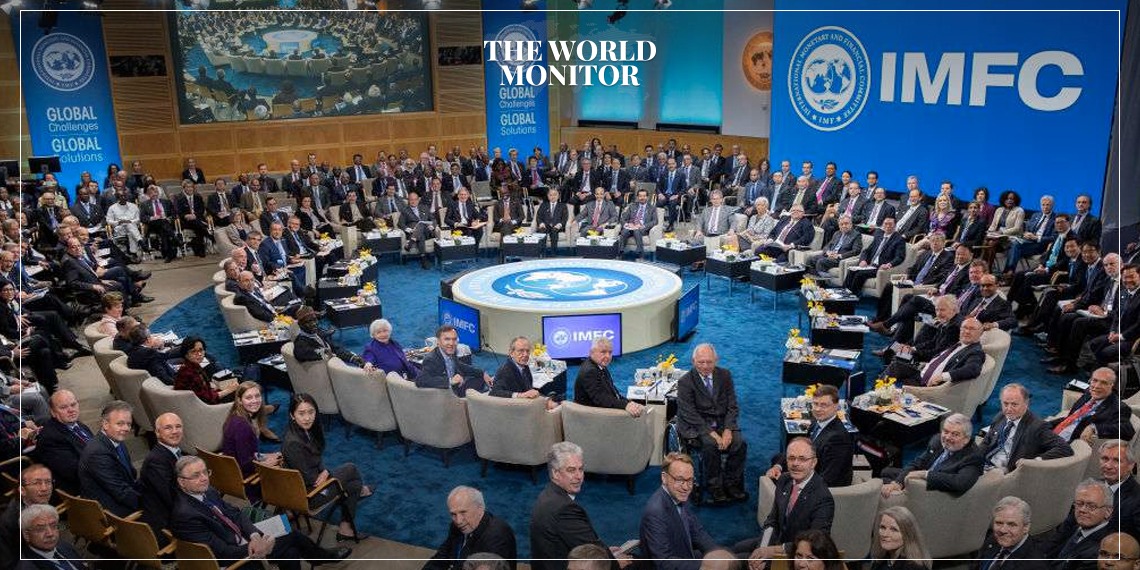
The International Monetary Fund (IMF) announced on Wednesday that its Executive Board has approved a $7.5 billion disbursement for Argentina. This decision comes following the completion of the fifth and sixth reviews of Argentina’s $44 billion program.
The IMF highlighted that, with this latest release, the total disbursed amount under the agreement now stands at approximately $36 billion. The majority of these funds are intended for settling financing from another program.
Back in late July, experts from the IMF and Argentina reached an agreement. However, the release of funds was pending the Board’s approval. The agreement also revised some economic objectives, in part due to a devastating drought that has posed numerous challenges for this major grain-exporting nation.
Prior to this disbursement, Argentina’s net foreign currency reserves were in the negative. Argentina also secured a $775 million loan from Qatar, a $1 billion loan from the Development Bank of Latin America and the Caribbean region, and $1.7 billion from a swap with China. These combined funds aim to make payments to the IMF within a tight timeframe this month.
Argentina has had a tumultuous relationship with the International Monetary Fund (IMF) for several decades. Historically, the country has experienced a series of economic crises, punctuated by sovereign debt defaults, high inflation rates, and currency devaluations.
1. Past Economic Challenges and IMF’s Role:
• In the early 2000s, Argentina defaulted on its debt, marking the biggest sovereign default in history at that time. The IMF had played a central role in the events leading up to this crisis, offering financial aid packages tied to strict economic reforms.
• These reforms, often known as “austerity measures,” were met with significant public protest and were blamed by many Argentinians for exacerbating economic hardships.
2. New Agreements and Debts:
• In 2018, amidst another currency crisis and fearing another default, Argentina approached the IMF for assistance. They secured a $57 billion bailout deal, the largest in the IMF’s history.
• This deal, like those of the past, came with conditions, including fiscal tightening and economic reforms, which have again been contentious within Argentina.
3. Economic and External Challenges:
• The country has been grappling with external challenges, like trade volatility, along with internal issues, such as political uncertainty, and, more recently, the devastating drought which has severely impacted its agricultural exports.
• The COVID-19 pandemic further aggravated Argentina’s economic vulnerabilities, causing a deeper recession and exerting additional pressure on the nation’s public finances and foreign reserves.
4. Debt Restructuring Efforts:
• Argentina’s past defaults have left it with a complex debt profile, involving multiple creditor groups. The country has engaged in negotiations with these creditors in recent years to restructure its debt and has sought further assistance and leniency from the IMF.
• The recent approval of the $7.5 billion disbursement is a part of Argentina’s ongoing relationship with the IMF to stabilize its economy and ensure its ability to meet financial obligations.
In summary, Argentina’s financial relationship with the IMF is long-standing and intricate, shaped by both external economic challenges and internal political and fiscal decisions. The latest disbursement signifies the IMF’s continued support, but it also serves as a reminder of the economic tightrope Argentina continues to walk.