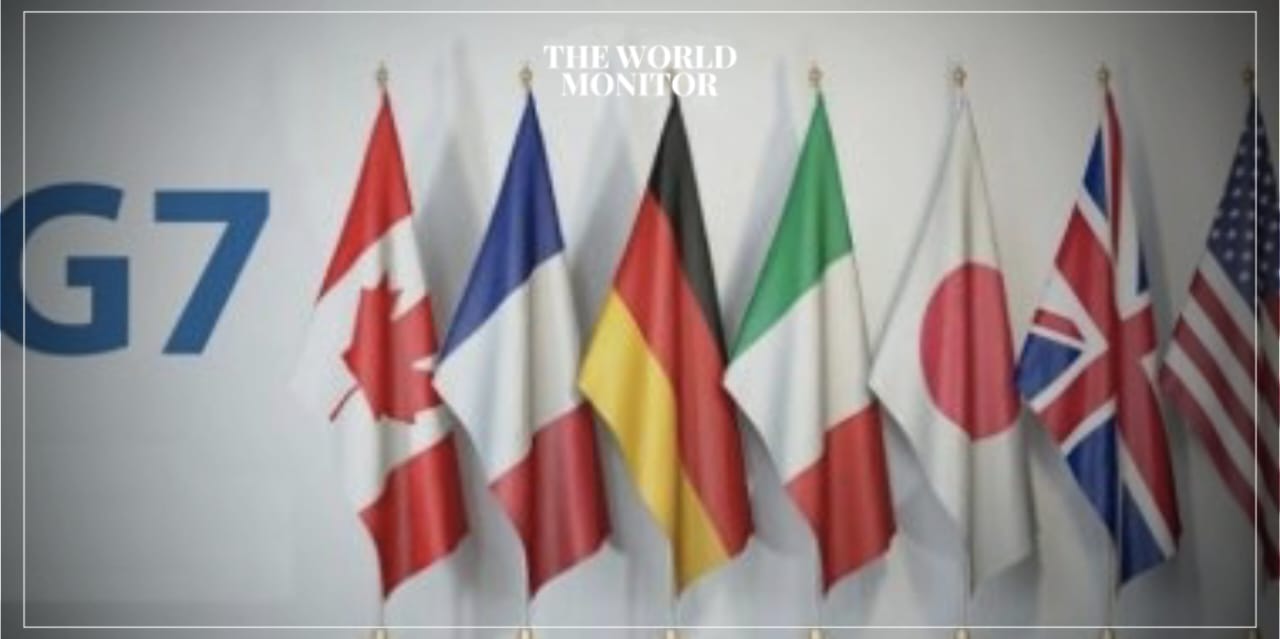
Group of Seven (G7) industrial powers has urgently called for an “immediate lifting” of restrictions placed on Japanese food imports. This plea comes as a direct response to China’s imposed limitations following Japan’s decision to release treated water from the Fukushima plant in August of the previous year.
As reported by Japan Times, this issue has become a matter of pressing global concern.
Without explicitly naming China, the G7 trade ministers have voiced their condemnation of what they perceive to be escalating economic pressures exerted through trade tactics. Their statement, spanning ten pages, resolutely denounces the utilization of economic dependencies as weaponry. They emphasize their commitment to fostering economic and trade relations that are free, fair, and mutually beneficial.
China, in its turn, initiated a comprehensive ban on Japanese fish imports two months prior, a decision which coincided with Japan’s commencement of treated water discharge into the Pacific Ocean. While Japan and the United States have criticized the restrictions as being unfair, Russia has implemented similar constraints earlier this month.
The G7, comprising the United States, Japan, Germany, Britain, France, Italy, and Canada, has expressed their “concerns” regarding the recent control measures on the export of critical metals. In an apparent move to consolidate control over vital mineral supplies in response to global manufacturing dominance challenges, China – the world’s leading graphite producer – has imposed export restrictions on the key component used in electric vehicle batteries this month.
As for Russia, G7 officials have condemned the destruction of Ukraine’s grain export infrastructure amidst the ongoing invasion, and Moscow’s unilateral decision to withdraw from talks on an agreement facilitating Ukraine’s wheat and other produce exports via the Black Sea.
Addressing the Middle East crisis involving Hamas and Israel, the G7 trade ministers have underscored their commitment to enhancing awareness about the challenges faced in transnational transportation of humanitarian goods during natural disasters and other emergencies.