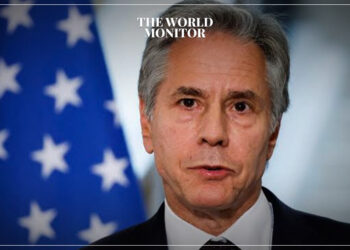

As the war that erupted in Sudan on April 15th of last year approaches its first anniversary, while the confrontations continue, a document prepared by civil parties and political groups revealed proposals for a political solution. The document, titled “Proposal for a Political Solution to End the War and Establish the Sudanese State,” and published by “Al-Majalla” magazine, included the cessation of hostilities and a two-month truce, followed by the formation of a civilian transitional government and a unified army over a period of ten years.
International and Arab Support
The document, which enjoys the support of international and Arab parties, consists of three sections including principles and foundations for a comprehensive solution, cessation of hostilities (hostile actions), and humanitarian aid, in addition to the political process. The drafting of this document was initiated by former Prime Minister Abdullah Hamdok and the “Sudanese Professionals Association,” based on “ongoing solution efforts at the forefront of which is the Jeddah Declaration signed on May 11, 2023, the IGAD and African Union roadmap, and the ‘Declaration of Principles’ signed in Manama on January 20th of this year.
The National Umma Party, the Communist Party, and the Arab Socialist Ba’ath Party warned in a statement last Sunday of what they described as a “settlement project being prepared with regional and international participation for power-sharing between the army and the Rapid Support Forces for ten years.” The three parties also announced their rejection of the project and called for the formation of a civilian bloc to stop the war. It was supposed to witness a ceasefire during the current month of Ramadan between the army led by Abdel Fattah al-Burhan and the Rapid Support Forces led by Mohamed Hamdan Dagalo, but the efforts failed, despite the Security Council adopting a resolution at the beginning of this month (March 2024) calling for a Ramadan truce, supported by 14 countries.
The conflict in Sudan, which erupted on April 15, 2023, has led to a devastating civil war between two factions of the military government: the Sudanese Armed Forces (SAF) under Abdel Fattah al-Burhan, and the paramilitary Rapid Support Forces (RSF) under Hemedti. The fighting, concentrated around Khartoum and the Darfur region, has resulted in significant casualties and displacement, with at least 13,000 to 15,000 people killed, 33,000 injured, and millions displaced internally and as refugees. The war has led to severe humanitarian crises, with attacks by the RSF on government sites and subsequent military engagements involving various rebel groups.
Nearly a year into the conflict, the UN has warned of “the world’s worst hunger crisis” in Sudan, highlighting the dire need for humanitarian assistance for a staggering 14 million children and the overall population. The conflict has caused the world’s largest displacement crisis, with millions of lives at risk and the peace and stability of the entire region in jeopardy. WFP Executive Director Cindy McCain has stressed the urgent need for the fighting to stop and for humanitarian agencies to gain access to those in need.
In response to the crisis, the United States has pushed for UN Security Council action to help end the nearly year-long conflict, emphasizing that the warring parties have committed war crimes, and the RSF and allied militias have committed crimes against humanity and ethnic cleansing. The U.S. Ambassador to the UN, Linda Thomas-Greenfield, highlighted the urgent matter of peace and security, calling for immediate action to alleviate human suffering, hold perpetrators accountable, and end the conflict.