
• About us
  • Contact Us
Tuesday, September 1, 2026
No Result
View All Result
The World Monitor
  • The World Monitor
  • Middle East
  • Africa
  • World
  • Economy
  • Sports
  • Climate
  • Technology
  • Crypto
  • The World Monitor
  • Middle East
  • Africa
  • World
  • Economy
  • Sports
  • Climate
  • Technology
  • Crypto
No Result
View All Result
The World Monitor
No Result
View All Result
Home Middle East

Iraqi Army Launches Anti-ISIS Strategy

Iraqi Army Launches Anti-ISIS Strategy

February 22, 2024
Iraqi Army Launches Anti-ISIS Strategy

Iraqi army

Share on FacebookShare on TwitterShare on Whatsapp

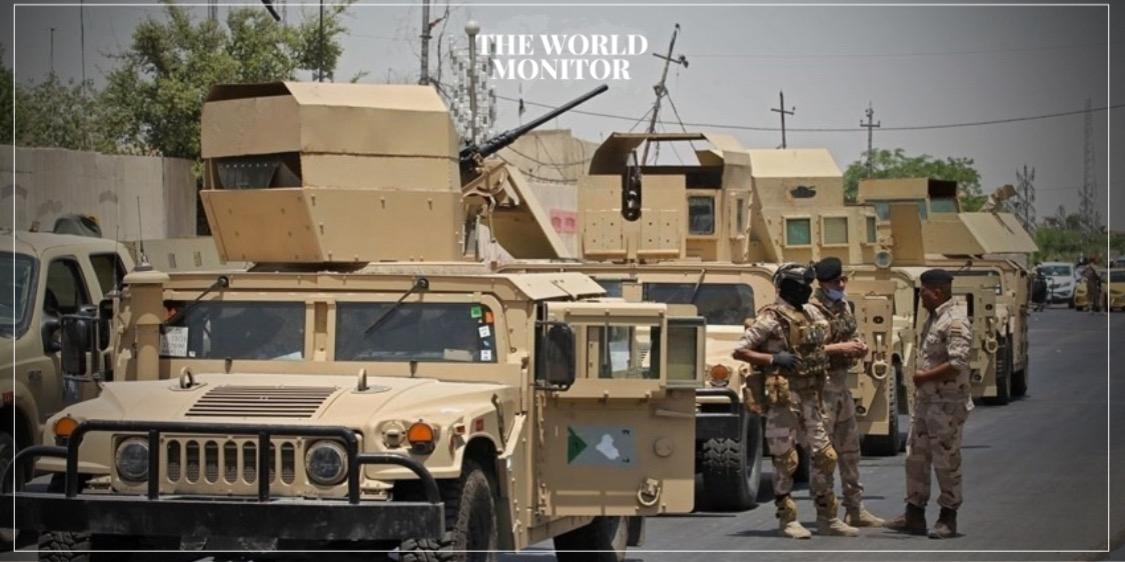
The Iraqi army commenced the initial phase of the “Frontline Strategy” yesterday in the depths of the Hamrin Hills, located in the far northeast of Diyala. This move is part of efforts to bolster urban security by advancing into strategic areas to sever the primary infiltration routes of ISIS terrorist cells from two provinces, thereby protecting over 300,000 inhabitants of liberated cities and villages.

A high-ranking security source stated, “The initial stages of the Frontline Strategy have begun in the Hamrin Hills, which for years resembled fiery hills due to the intensity of events and the spread of ISIS cells. However, the situation has changed in recent years thanks to a concerted security effort that has significantly reduced the organization’s threat.”

The source further explained, “The Frontline, extending at least 30km in depth, will be accompanied by the deployment of stationary points, especially as security responsibilities in Diyala are being transferred to the police and combat units are moving to the outskirts of major cities within permanent barracks. This strategy considers the distribution of positions across distant axes to ensure control over the peripheries with force.”

Since ISIS’s territorial defeat in 2017, Iraq has faced significant challenges, including a massive internally displaced persons (IDP) crisis and the legitimization of militias adopting the Hezbollah model in Lebanon. Despite the official victory, over a million IDPs remained in camps as of August 2018, with many unable to return home due to destruction and ongoing ethnic and sectarian tensions. Furthermore, the political landscape has shifted, with militias gaining both de facto power and political representation, significantly influencing Iraq’s security and political dynamics​​.

The Islamic State insurgency in Iraq, ongoing since 2017, continues as a low-intensity conflict following ISIS’s loss of territorial control. The insurgency involves ISIL’s armed opposition against the Shia-led Iraqi government, alongside other insurgent groups like the White Flags, composed of former ISIL members and Kurdish rebels. These groups employ guerrilla tactics against government forces, maintaining a presence in areas like the Kirkuk Governorate​​.

Tags: ArmyIraqISIS
Next Post
Egyptian Agricultural Exports Reach $3 Billion in 2023

Egyptian Agricultural Exports Reach $3 Billion in 2023

Leave a Reply Cancel reply

Your email address will not be published. Required fields are marked *

Recommended

Egypt Hosts Largest Number of Sudanese Refugees

Egypt Hosts Largest Number of Sudanese Refugees

2 years ago
Flights Between Yemen & Jordan Resume

Flights Between Yemen & Jordan Resume

2 years ago

Popular News

  • The United Nations High Commissioner for Refugees (UNHCR) has classified the humanitarian situation in Ukraine as extremely critical, warning of a slowdown in aid nearly two years into the Ukrainian crisis. Filippo Grandi, the UN High Commissioner for Refugees, stated that "aerial bombings are a daily occurrence, especially in frontline areas and cities, bringing destruction primarily affecting civilians, leading to a significant number of people becoming homeless and displaced." During a week-long visit to aid projects in Odessa, Kryvyi Rih, Dnipro, Kharkiv, and Kyiv, Grandi expressed concerns over the emerging cracks and dangers, emphasizing that these issues would worsen if international support continues to dwindle. Despite satisfactory funding for the UNHCR and other aid organizations in 2022 and 2023, there is a risk of reduced aid this year. UN estimates indicate that there are 3.7 million internally displaced persons in Ukraine and another 6.3 million refugees in other countries. In a separate context, the Russian Ministry of Defense reported that its forces had taken control of strategic lines and positions, repelling 17 attacks, resulting in approximately 2300 Ukrainian military casualties on the Krasny Liman and Kupyansk fronts over a week. The ministry also highlighted the control over Krakhamalnoye in the Kharkov region by Western group forces, improvement in frontline positions in some areas, and the repulsion of 43 Ukrainian attacks with the support of aviation and artillery. The Ukrainian forces reportedly lost over 740 soldiers, 7 tanks, 7 armored combat vehicles, 18 vehicles, and 14 pieces of field artillery. Russian President Vladimir Putin, in a meeting with soldiers participating in the military operation in Ukraine, mentioned the presence of over 600,000 Russian military personnel in the operational area. Putin acknowledged the need for continuous adjustments and solutions due to the vast combat zone, spanning nearly 2000 kilometers, and the extensive deployment of forces. The recent conflict between Ukraine and Russia, which escalated dramatically in February 2021, has its roots in long-standing political, historical, and cultural tensions. Following Ukraine's move towards Western integration, Russia annexed Crimea in 2014 and supported separatist movements in Eastern Ukraine, leading to ongoing skirmishes in the Donbas region. The situation intensified when Russia launched a full-scale invasion of Ukraine, marking a significant escalation in hostilities. This conflict has led to widespread international condemnation of Russia, numerous sanctions against the Russian government, and a humanitarian crisis with millions of displaced individuals. The war has drawn global attention to the security dynamics in Eastern Europe, the role of NATO, and the broader implications for international law and order.

    UNHCR Declares Ukraine’s Humanitarian Situation ‘Extremely Critical

  • Jordan Seeks to Renew Memorandum for Iraqi Oil Imports

  • US Predicts Israel-Hezbollah Settlement

  • US Reports Houthi Attack on Saudi Oil Tanker

  • Threads App Launches in Europe

Follow us

"Connecting the World to the Heartbeat of Middle East and Africa – Your Trusted Source for News and Insights."

  • The World Monitor
  • Middle East
  • Africa
  • World
  • Economy
  • Sports
  • Climate
  • Technology
  • Crypto

ABOUT US

CONTACT US

Privacy Policy

  • About us
  • Contact Us

© 2023 THE WORLD MONITOR

No Result
View All Result
  • Home
  • Africa
  • World
  • Economy
  • Climate
  • Sports
  • Crypto
  • Technology

© 2023 THE WORLD MONITOR