
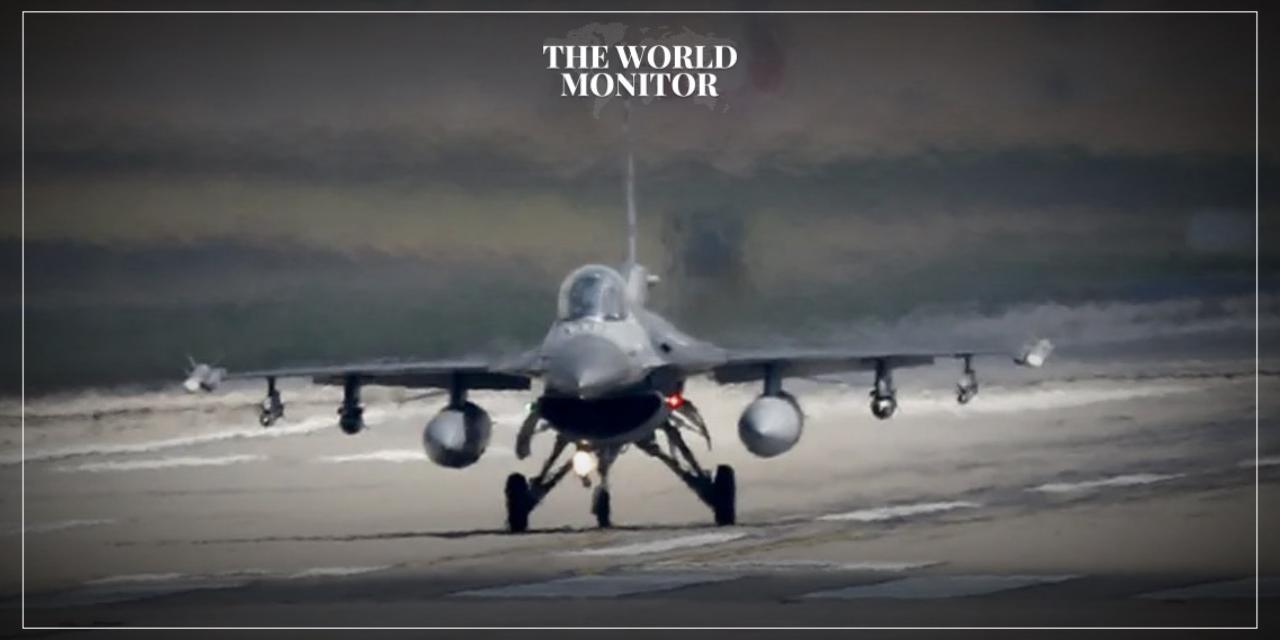
The U.S. Department of Defense announced on Friday that the State Department has approved a potential sale of F-16 fighter jets and related equipment to Turkey, estimated at around $23 billion. Lockheed Martin, the world’s largest defense contractor, is the primary contractor for the deal. This approval follows shortly after Turkey’s ratification of Sweden’s NATO membership, removing a significant obstacle to the Western military alliance’s expansion after a 20-month delay. The U.S. government’s green light for the F-16 sale to Turkey came as part of a broader package that also includes F-35 jets for Greece. The State Department has formally notified Congress of this dual deal, as required by U.S. law.
This development comes after the Biden administration urged Congress last week to approve the F-16 sale to Turkey, citing diplomatic sources. Turkey’s parliamentary approval for Sweden’s NATO bid was a key factor in moving forward with the fighter jet deal, which had been a major hurdle in gaining Congressional approval. Turkey had initially requested to purchase F-16 jets worth $20 billion in October 2021, along with nearly 80 upgrade kits for its existing fleet.
Senate Foreign Relations and House Foreign Affairs committees typically review all major foreign arms sales, with concerns over human rights and diplomatic issues potentially delaying or halting such deals. Sweden and Finland applied for NATO membership following the Ukraine conflict in February 2022. While Finland has already joined, Sweden’s membership had been delayed due to lack of ratification by Turkey and Hungary.
The background of U.S. military support to Turkey extends beyond the recent F-16 fighter jet sale and involves various forms of cooperation and assistance over the years. A significant aspect of this relationship was highlighted when Turkey acquired the Russian S-400 surface-to-air defense system in 2019, which led to Turkey’s removal from the F-35 Joint Strike Fighter program and resulted in sanctions under the Countering America’s Adversaries Through Sanctions Act (CAATSA). The ongoing issue with the S-400 system has been a sticking point, potentially preventing major Western arms sales to Turkey and impacting its integration with NATO defense strategies. Despite these tensions, the U.S. and Turkey have continued to engage in defense cooperation, particularly in areas where their interests align, such as counteracting Russian influence in various conflict zones through Turkey’s use of domestically produced drone aircraft and other military assets.
In addition to arms sales and economic agreements, the U.S. has provided humanitarian assistance to Turkey in times of need, such as after the devastating earthquake in February 2023. The U.S. military was quick to send rescue teams and medical equipment to assist with disaster relief efforts, demonstrating the multifaceted nature of U.S.-Turkey relations that span military, economic, and humanitarian dimensions.