
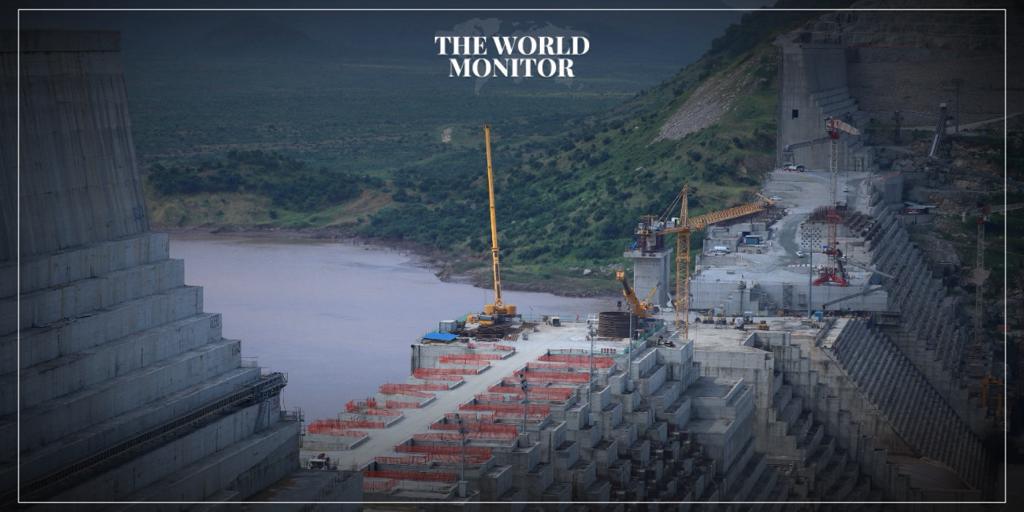
In a move that capitalizes on Egypt’s concerns over the Gaza conflict and Sudan’s internal strife, Ethiopia has initiated the final phase of construction on the Great Ethiopian Renaissance Dam (GERD).
The announcement was made by Ethiopian Deputy Prime Minister and Foreign Minister Demeke Mekonnen at the conclusion of a meeting of the National Dam Coordination Council in Addis Ababa.
According to Mekonnen, the dam’s construction rate has reached 94.6%, marking significant progress.
He commended the Ethiopian people for their support and conservation efforts in the basin, showcasing the country’s determination.
Mekonnen also blamed Egypt for the failure of recent negotiations, highlighting the four rounds of tripartite talks held in recent months. Despite the diplomatic setbacks, Ethiopia remains committed to regional integration and mutual development.
Satellite images published by “Al Arabiya” reveal Ethiopia’s commencement of the dam-raising process across the central corridor, with concrete pouring activities.
Two excavators are observed working above the central corridor, possibly for joint-making or connections with the newly poured concrete.
According to Egyptian expert Abbas Sharaqi, water flow above the central corridor ceased on December 15, indicating the complete drying of the corridor after the opening of drainage gates and non-operational turbines.
The dam’s water reserve has reportedly decreased by over one billion cubic meters, leaving the total storage at less than 40 billion cubic meters.
This latest Ethiopian action follows the failure of the fourth round of negotiations involving Ethiopia, Egypt, and Sudan over the GERD project.
The Egyptian Ministry of Water Resources and Irrigation expressed dissatisfaction with Ethiopia’s persistent refusal to adopt compromise solutions, accusing Ethiopia of exploiting negotiations to solidify its control over the Blue Nile.
Egypt forwarded the dossier to the United Nations Security Council, asserting that Ethiopia’s actions pose an existential threat, violate international law, and breach the Declaration of Principles that mandates reaching a binding legal agreement on dam rules.