
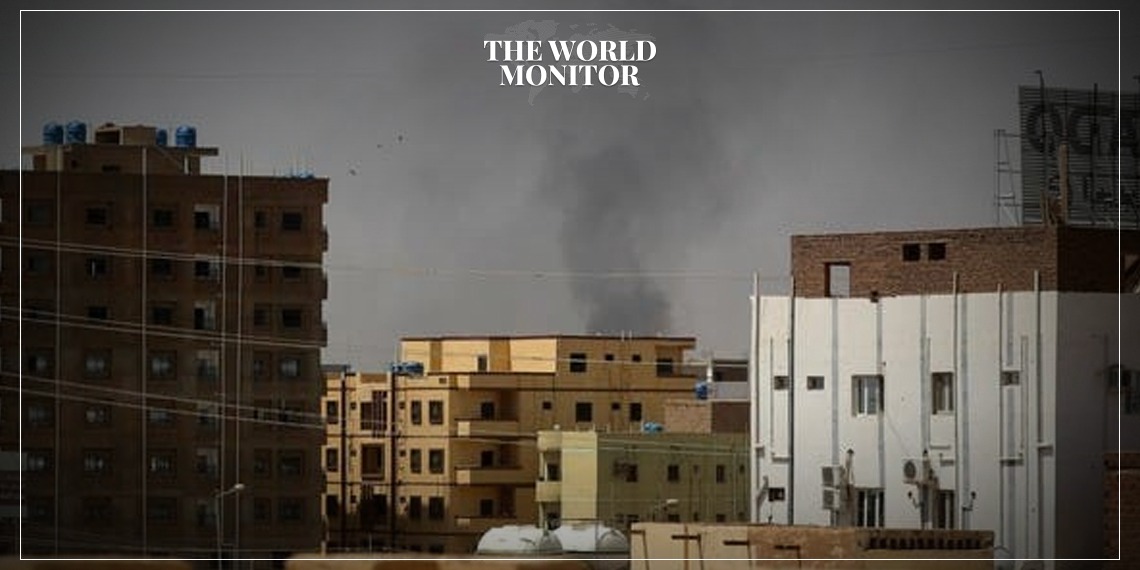
A correspondent for Cairo News has reported that the Rapid Support Forces militia bombed the army headquarters in the heart of Khartoum, Sudan’s capital.
The Sudanese Ministry of Foreign Affairs expressed its appreciation for the statement made by U.S. Secretary of State Antony Blinken on the occasion of Sudan’s 68th independence anniversary.
In his statement, Blinken mentioned that the U.S. government would continue its efforts to end the conflict in Sudan, aiming to achieve peace, security, and prosperity for the Sudanese people in the new year.
However, in a statement released today, the Sudanese Foreign Ministry expressed surprise over the generalized language used in the statement.
It referenced crimes against humanity, ethnic cleansing, and sexual violence without specifically naming those responsible.
This contrasts with a previous statement from the U.S. Secretary of State on December 6, 2023, which explicitly held the Rapid Support Forces accountable for these crimes. Additionally, prominent members of the U.S. Congress have condemned the rebel forces for committing such crimes.
On Tuesday, Sudanese Army Chief Abdel Fattah al-Burhan, who is also the head of the Sovereignty Council, confirmed on Sunday that the only way to stop the war is for the Rapid Support Forces to withdraw from the Gezira State and other Sudanese cities.
In a televised speech, he stated that the armed forces support negotiation efforts and are exploring ways to end the eight-and-a-half-month-long war, backing calls for a resolution to the crisis.
These statements come as clashes and shelling between the Sudanese army and Rapid Support Forces in eastern Gezira State, in central Sudan, and around the ‘Hantoub’ bridge, which connects the east and west of Wad Madani (the state capital), continued for the third consecutive day.
The renewed fighting after a brief lull in the early hours of Sunday has increased tension and concern among the residents of Wad Madani.
Sounds of shelling were heard east of the city in the morning, while markets and service institutions closed, and many residents fled in search of safe havens.
Wad Madani had been a safe haven before the clashes reached it, sheltering citizens who fled from Khartoum to escape the fighting that broke out in the capital in mid-April between the army and Rapid Support Forces.