
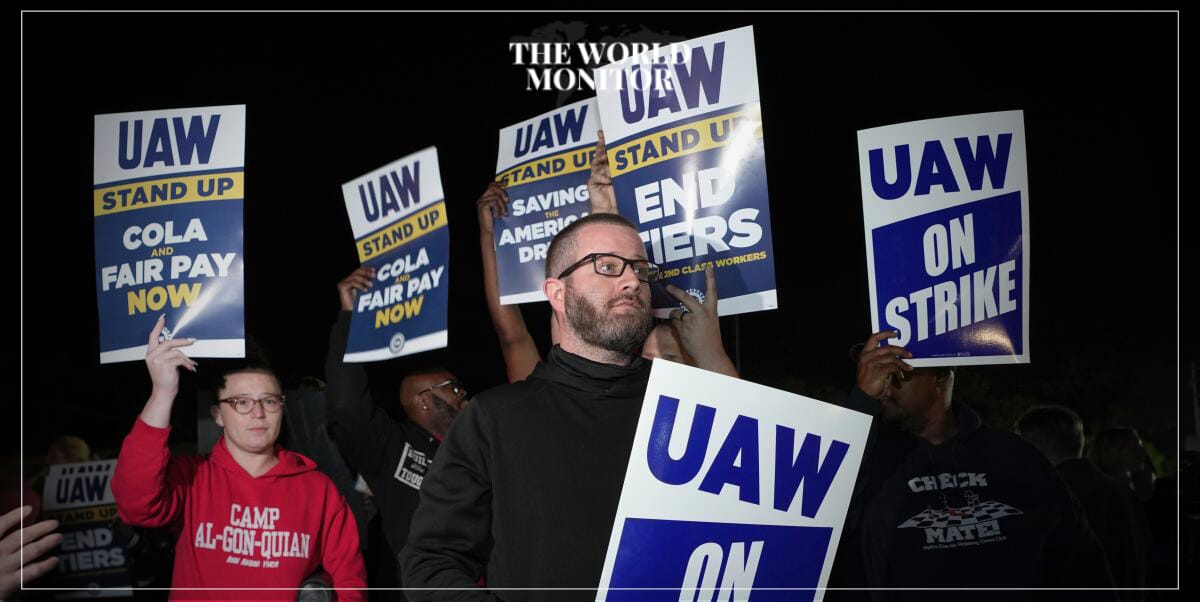
In an unprecedented move, approximately 13,000 US auto workers went on strike today, Friday, following unsuccessful negotiations between union leaders and the country’s top three automakers. The aim of these negotiations was to bridge the significant gap between labor union demands in contract discussions and what Detroit’s big three automakers are willing to offer.
According to Associated Press, members of the United Auto Workers union began picketing at General Motors’ assembly plant in Wentzville, Missouri; Ford’s factory in Wayne, Michigan, near Detroit; and the Stellantis Jeep plant in Toledo, Ohio. This strike marks the first time in the union’s 88-year history that workers from three companies have launched a simultaneous strike after four-year contracts with the companies expired at midnight on Friday.
Associated Press noted that the outcome of these strikes could very likely determine the future of the union and the local car industry in the US. This comes at a time when the American workforce is flexing its muscles and companies are undergoing a historic shift from fuel-operated vehicles to electric cars.
The news agency warned of potential vehicle shortages and surging prices if the strike continues for an extended period. The strikes could also influence the upcoming US presidential election, serving as a litmus test for President Joe Biden’s claims of being the most pro-worker president in US history.
Liz Shuler, president of an association encompassing 60 unions with a collective 12.5 million members, stated, “Workers worldwide are watching.” The report emphasized the distinction of this strike from past ones during auto industry union negotiations. Instead of targeting a single company, the union, under the leadership of its new president, Shaun Fine, is striking against all three firms. However, not all workers have stopped working, at least for now.
The United Auto Workers (UAW) is one of the most influential labor unions in the United States, representing workers from major automakers, among other industries. The union has historically played a significant role in advocating for better wages, benefits, and working conditions.
The auto industry, vital to the US economy, has been witnessing a transformation, with companies investing heavily in electric vehicles and new technologies. As such, contract negotiations have become even more critical, not just in terms of worker compensation, but also in ensuring that employees are adequately prepared and trained for this industry shift. The current strikes, affecting the industry’s giants, underscore the tensions and challenges inherent in navigating these changes.