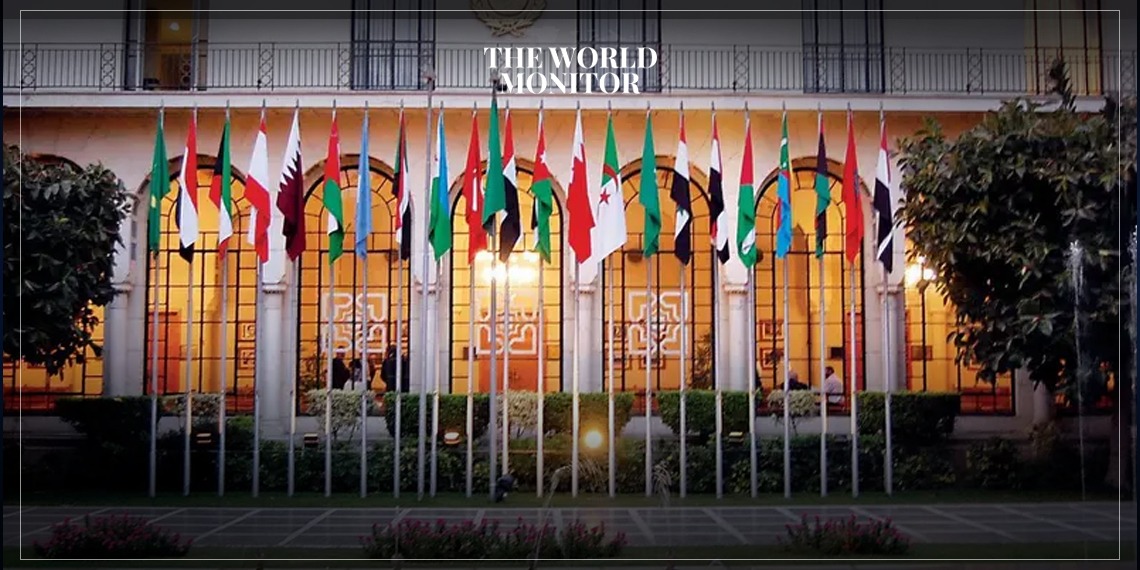
The Federation of Arab Chambers is adopting a pioneering project to facilitate the movement of individuals and capital across Arab nations, aiming to invigorate inter-Arab trade.
As announced by Khaled Hanafi, Secretary-General of the Federation, the initiative involves creating a “white list” to ease the mobility of Arab businessmen throughout the region through a unified visa system.
Ease of Movement for Arab Entrepreneurs
This revolutionary “white list” will allow Arab businessmen to travel from one Arab country to another for a duration of five years without undergoing the usual visa entry procedures and security checks each time. This initiative is set to significantly reduce bureaucratic hurdles, encouraging freer movement and investment.
A Step Towards Economic Integration
The Federation, in collaboration with the Council of Arab Interior Ministers and the Secretary-General of the Arab League, is working to endorse the proposal. The overarching goal is to increase joint Arab investments and strengthen inter-Arab trade, as explained by Hanafi.
Recent developments indicate a shift towards this goal, with regions like the Gulf adopting a unified visa and countries like Egypt and Saudi Arabia beginning to allow entry to certain visa holders from Europe without additional procedures. These steps are a testament to the growing commitment to facilitate the movement of Arab investors.
Bahrain Declaration: A Vision for Economic and Social Integration
In a landmark move last September, the Board of Directors of the Federation of Arab Chambers launched the “Bahrain Declaration for the Arab Private Sector.”
The declaration emphasized the importance of doubling efforts to achieve economic and social integration in the Arab world, deeming it fundamental for collective growth and development.
It advocates for the realization of four freedoms enhancing Arab economic integration: movement of individuals, capital flow, goods transit, and service mobility.
Addressing Currency Transfer Challenges
Hanafi highlighted the Federation’s work with Arab countries facing foreign currency crises, aiming to devise solutions that facilitate the flow of capital transfers in and out of these nations.
Arab-Chinese Strategic Alliance
In another significant development, the Federation is shifting the Arab-Chinese relationship from purely commercial to a strategic alliance in production, industry, and trade.
The Federation seeks to actively engage in China’s Belt and Road Initiative, which aims to enhance trade with Asia, Africa, and Europe, establishing pivotal Arab regions as key nodes in this venture.
In 2022, the bilateral trade between China and Arab countries exceeded $330 billion, with an anticipated 10% increase in 2024. This long-standing economic cooperation marks a new era of strategic partnership, potentially reshaping the economic landscape of the Arab world.