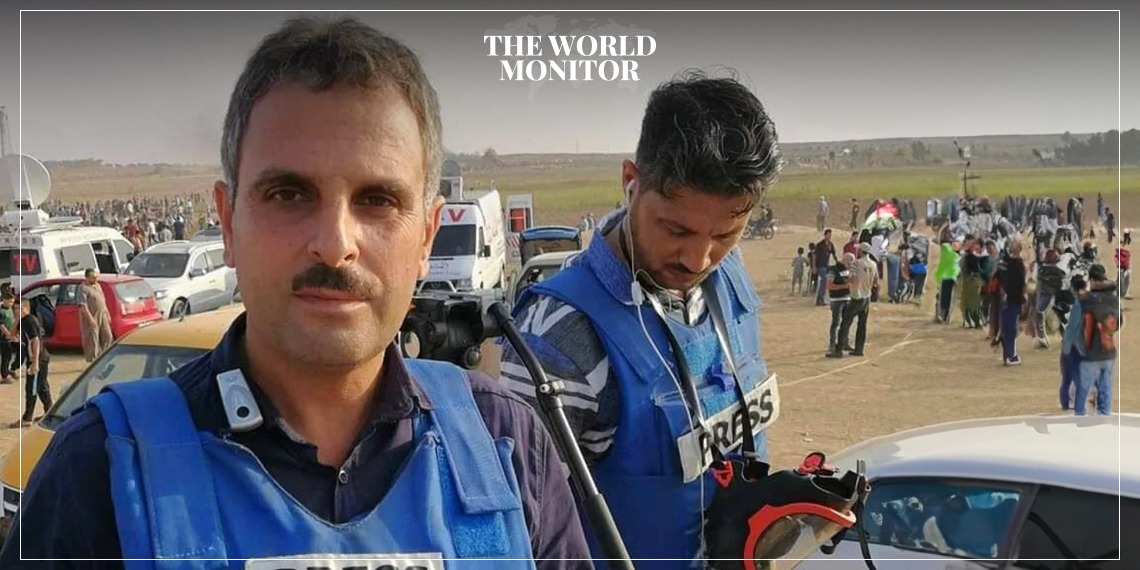
Brazilian newspaper Folha de S. Paulo reports that at least 27 Palestinian journalists have been killed in the Gaza Strip since the onset of the conflict with Israeli forces.
The latest casualty is Palestinian TV reporter Mohammad Abu Hatab, who died in an Israeli airstrike on his home.
The attack in Khan Younis, which claimed Abu Hatab’s life, also resulted in the death of 11 other individuals, including members of his family, according to the newspaper.
The Ministry of Health in Gaza has stated that the Israeli bombings have led to over 9,000 deaths, most of whom are civilians.
In light of these events, the International Federation of Journalists has urged field journalists in the Gaza sector to take necessary precautions, wear professional safety equipment, and refrain from covering events without it.
Jonathan Dagher, a Middle East officer for Reporters Without Borders, highlights the extreme risks faced by journalists covering the ongoing events in Gaza.
They are subjected to considerable constraints and attempts to deter them from their reporting duties, sometimes escalating to lethal outcomes, as was the case for ten journalists.
Beyond the grave dangers posed by gunfire and aerial raids, the conflict also spurs assaults on journalists away from the front lines.
Research conducted by the Committee to Protect Journalists has documented more than ten incidents of assaults, arrests, threats, cyberattacks, and censorship against journalists while performing their duties in Israel and the Palestinian territories, particularly in Gaza and the West Bank.
The Israeli aggression had resulted in the destruction of 221 educational institutions, 34,000 residential units, and 35 hospitals rendered non-operational, with 55% of the healthcare sector ceasing to function.