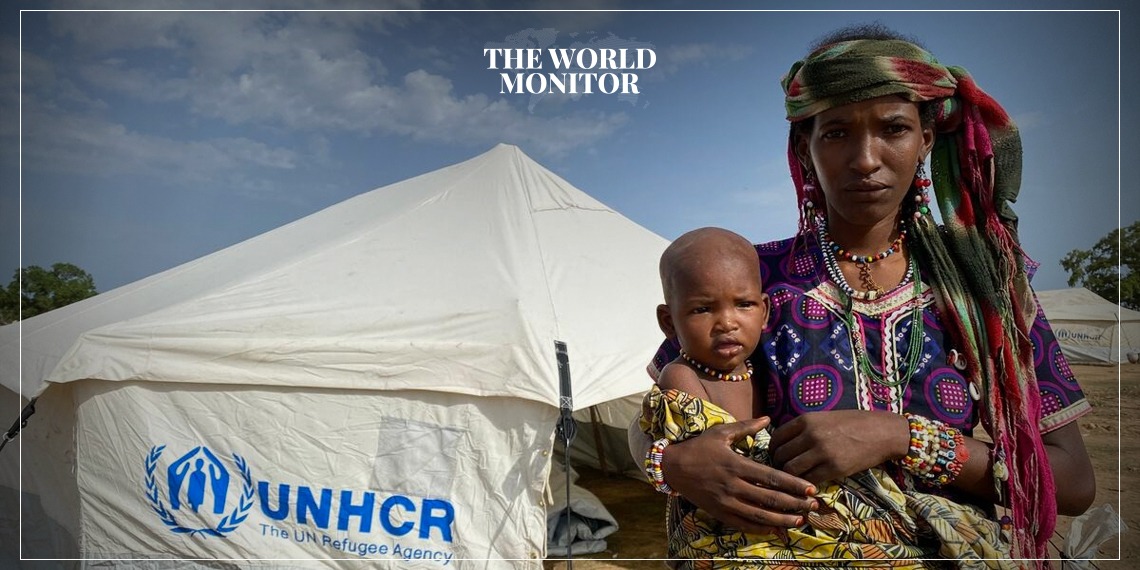
The United Nations High Commissioner for Refugees (UNHCR) has expressed concern over the potential influx of more refugees from Darfur to Chad in the coming weeks, particularly due to the alarming shortage of food and other essentials.
In a statement released on Friday in Geneva, the agency highlighted that Chad, after a year of conflict in Sudan, urgently needs more humanitarian aid and significant development investments to stabilize its fragile social and economic environment, especially in the eastern regions hosting refugees.
Kelly T. Clements, the Deputy High Commissioner for Refugees currently in Chad, mentioned that local officials are worried about the imminent arrival of more Sudanese families, which could further strain the country’s resources.
She pointed out that the World Food Programme had to suspend food rations for certain refugee groups in December due to funding shortages.
Subsequently, the government declared a food security emergency, and no food supplies have been distributed from Chad across the border to Darfur, where the security and protection situation remains concerning.
The influx into Chad has slowed in recent months, but this is quickly changing, Clements noted, adding that the needs are now far beyond the humanitarian agencies’ capacities even without additional arrivals.
She warned that the dire situation could worsen considerably without concerted efforts to provide more support to Chad.
UNHCR reported that by mid-February, over 553,000 new refugees had fled from Sudan to Chad, making it the largest host of refugees fleeing the Sudanese conflict since it erupted in mid-April 2023.
Chad currently hosts approximately 1.1 million refugees, making it the largest refugee host in Africa.
This number includes Sudanese who arrived before the recent conflict, as well as others from the Central African Republic, Nigeria, and Cameroon.
The refugee agency stated that programs for forcibly displaced individuals in Chad are facing chronic funding shortages, noting that for 2024, the organization alone requires $319.5 million, of which only 4% has been funded so far.