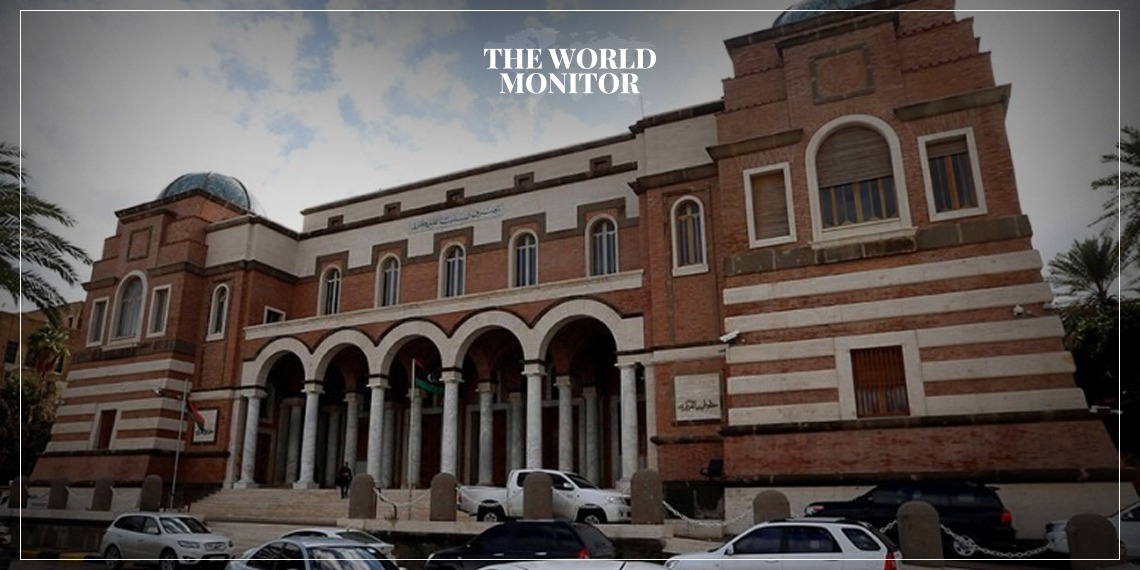
The Governor of the Central Bank of Libya (CBL), Siddiq Al-Kabir, addressed a letter to the Prime Minister of the Government of National Unity, Abdul Hamid Dbeibah, referring to the financial situation, exchange rates, and salary increases.
Al-Kabir’s letter to Dbeibah highlighted several points related to the financial situation, exchange rates, and salary increases, according to the bank’s data.
Given the Central Bank of Libya’s role as the economic advisor to the state as per existing legislation, Al-Kabir emphasized the importance of bringing these matters to Dbeibah’s attention:
Agreement on the right of Libyans to live a dignified life and receive salaries that ensure a decent living, which can only be achieved through proper financial resource management, ensuring the sustainability of such a dignified life.
Recognition of oil as the sole income source for the Libyan state, funding over 95% of the general budget.
Reference to the desire for the dollar exchange rate to be 1.3 Libyan dinars per dollar, a goal that cannot be achieved by wishful thinking alone.
Past government practices have been contrary, with uncontrolled expansion in public spending, particularly in consumption, which accounts for over 95% of public expenditure.
Salary expenses alone constitute 60% of public spending, with the salary item jumping from 33 billion dinars in 2021 to 65 billion in 2023.
The subsidy item increased from 20.8 billion dinars in 2021, including fuel subsidies, to 61 billion during 2022, with an expectation of exceeding this amount in 2023, including 41 billion dinars for fuel subsidies.
This increase in fuel subsidies, costing around 8.5 billion dollars annually, along with other subsidy expenses directed towards the electricity sector amounting to 40 billion dinars, brings the total annual direct and indirect subsidy expenses to 102 billion dinars.
Al-Kabir questioned the surge expenses from 20.8 billion dinars, including fuel subsidies in 2021, to 61 billion dinars in 2022, indicating mismanagement and distortion in fuel subsidy management.