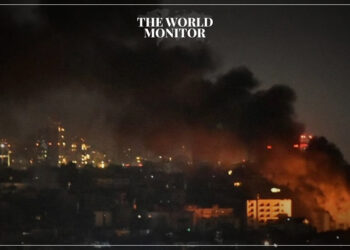

The 128th Brigade of the Libyan National Army launched an attack on elements of armed groups involved in smuggling and gold mining in the Klengha border area with Chad.
Sources from the Libyan National Army told the Italian agency Nova that the operation aims to strengthen control over the borders with Chad and Niger in light of the recent trade agreement signed in Benghazi between Tripoli and Niamey.
The agreement, signed by General and Minister of Interior of Niger, Mohammed Toumba, with the General Command of the Libyan National Army, aims to revive an old agreement concerning the protection of the common borders between the two countries and another agreement related to the exchange of intelligence information, in addition to a memorandum of understanding related to free trade and economic zones.
The signing of the agreement comes as part of an official working visit to Benghazi that Toumba started on August 15 and is still ongoing, accompanied by a delegation from the intelligence and counter-terrorism agency.
The General, Saddam Haftar, Chief of Staff of the Ground Forces, sent a condolence telegram to the commander of the 128th Enhanced Brigade, General Hassan Muatook Zama, in honor of the heroes of the 128th Enhanced Brigade who were martyred in clashes with militants in the Klengha border area with Chad.
General Saddam in the condolence published by the Presidency of the General Staff of the Ground Forces praised the role of the members of the 128th Enhanced Brigade in defending the country’s southern borders, “praying to God to accept the martyrs of duty into the gardens of eternity and for swift healing to the wounded and protection for those stationed on the country’s frontiers.”
The security situation in southern Libya, particularly along the border with Chad, remains precarious. This instability is fueled by the presence of armed groups and ongoing issues with smuggling and gold mining activities, similar to the recent actions by the Libyan National Army against such groups in the Klengha area. The region’s security challenges are compounded by the broader regional crises in Sudan and the Sahel, which also impact Chad.
The Libyan National Army’s operations in border areas like Klengha, while aimed at controlling smuggling and militant activities, also reflect Libya’s broader goal of securing its borders under recent agreements with neighboring countries, including Chad and Niger. These agreements focus on enhancing border security and intelligence sharing, which are crucial given the porous nature of the Libya-Chad border and the active presence of various militant and criminal groups.
Moreover, the political instability in Libya, with ongoing challenges in political reconciliation and the establishment of a unified government, continues to impact its security policies and relations with neighboring countries like Chad. The political fragmentation in Libya has direct implications for border security management and cooperation with Chad, as different Libyan factions control various territories and have differing priorities and capacities.