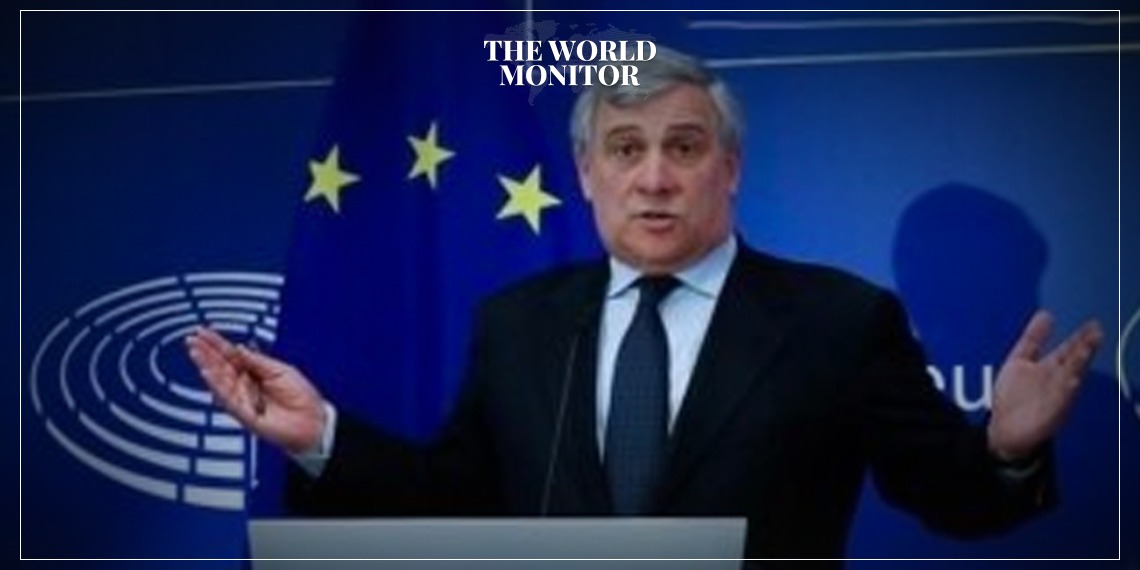
Italian Deputy Prime Minister and Foreign Minister, Antonio Tajani, described the current situation in Ukraine as complex. He emphasized the importance of never abandoning diplomacy and working to ensure a military balance that ultimately leads to lasting peace and ends the war that has caused many deaths.
In his radio statement on Monday, reported by the Italian news agency Agenzia Nazionale Stampa Associata (ANSA), Tajani stated that if the goal is to reach an agreement that leads to the end of the war, it is imperative not to allow a Russian invasion of Ukraine, as that would not be peace. He pointed out that this is why it is correct for the West to continue assisting Ukraine.
Tajani added, “If we want to achieve peace between Moscow and Kyiv, we must avoid the surrender of Ukraine.” He emphasized that Italy is always striving to bring peace, and that this is their priority.
Since the beginning of the Russian invasion of Ukraine in 2022, Italian government, led by Prime Minister Giorgia Meloni, has vowed to continue Italy’s staunch support and military assistance for Ukraine. This commitment is critical, as Italy is a significant player in the European Union and NATO. However, public opinion in Italy has shown some signs of wariness regarding the conflict. Polls indicate that less than 40% of Italians approve of their country supplying weapons to Ukraine, a sentiment echoed across various political spectrums in the country. This skepticism is not just due to political reasons but also reflects the economic challenges that Italy faces, such as rising energy costs and inflation, which have been exacerbated by the conflict.
Italy’s relationship with Russia, particularly in the economic sphere, has historically been strong. Italy relies significantly on Russian natural gas for its energy needs, making it one of the European countries most impacted by the conflict in terms of energy security. The Italian government has had to balance its response to the crisis, maintaining a stance against Russian aggression while dealing with the domestic impact of reduced energy supplies and increased prices.
Despite these challenges, Italy has stood with its Western allies in imposing sanctions against Russia. The sanctions have included measures like excluding Russian banks from the SWIFT financial system and restricting energy imports. These steps underscore Italy’s alignment with the EU in responding to the Russian invasion, despite the economic and energy ties that have historically connected Italy and Russia.