
Sudan, particularly the states of Greater Darfur, Northern State, River Nile State, and the three eastern states, has never witnessed rainfall and flooding on this scale.
Experts link this phenomenon to global climate change and the rising temperatures of the Earth, commonly known as global warming.
The torrential rains, floods, and accompanying devastation have led to the destruction of thousands of homes and public and private infrastructure.
The disaster has also resulted in the deaths of dozens of citizens, injured thousands, and displaced hundreds of thousands as floodwaters engulfed their communities.
Citizens have expressed frustration over the delayed response from relevant authorities, both governmental and non-governmental, in providing urgent assistance such as shelter tents, food aid, clean water, and medical supplies to address the emergency situation.
Residents of affected areas are particularly concerned that stagnant floodwaters may lead to the spread of infectious diseases, especially cholera, which has already been reported in displaced persons’ camps around El Fasher and in Kassala State.
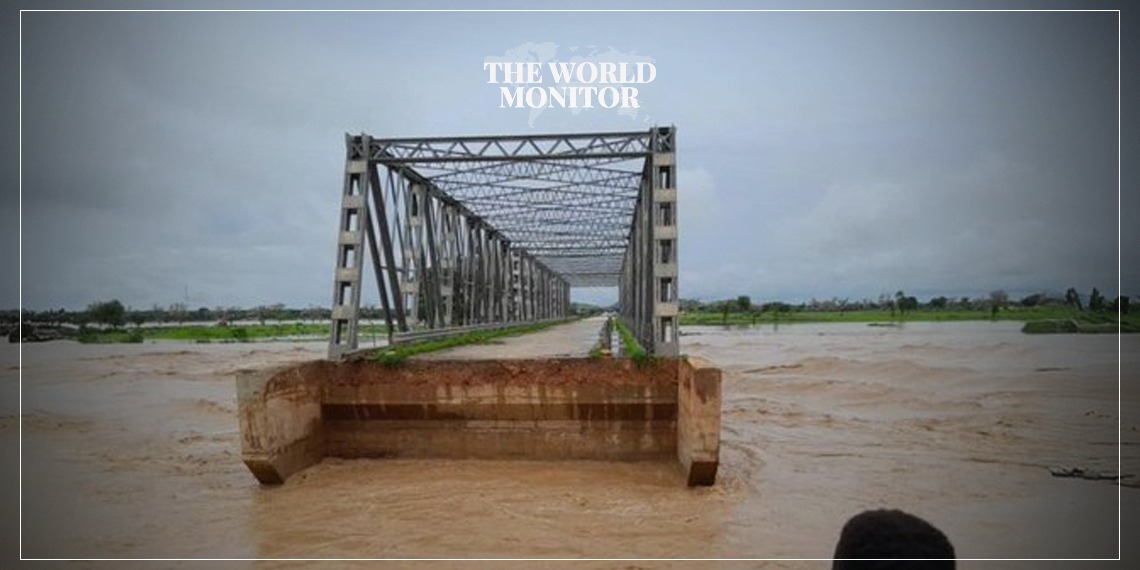
However, one of the most alarming aspects of this exceptional rainy season, accompanied by floods, has been the complete or partial destruction of several bridges, rendering them unusable.
This has severely impacted the lives of residents in affected areas, particularly due to the challenges in delivering supplies and the poor condition of roads during the rainy season.
Wadi Bari Bridge
A tweet from Médecins Sans Frontières (MSF) on August 12, 2024, announced the “collapse of a vital bridge connecting West, Central, and South Darfur states due to heavy rains and flooding last week.
This was the only safe route for delivering humanitarian aid to Central and South Darfur. This adds another major obstacle to our efforts to deliver life-saving aid across Sudan.”
The head of the civil administration in West Darfur State, Tijani Taher Karshoum, noted that the collapse of the road connecting West and Central Darfur in the Murnei area due to floods has severely impacted the lives of citizens.
During his visit to inspect the bridge, Tijani Karshoum confirmed that the damage was extensive, leading to a halt in commercial traffic and travel to other Darfur states, further exacerbating the suffering of the citizens.
The state official emphasized the urgent need for intervention to repair the road and stated that his government would strive to find an alternative route until the Wadi Bari bridge is repaired.
He called on citizens and organizations to contribute quickly to rehabilitating the road to restore commercial movement and facilitate the entry of humanitarian aid to assist those in need.
Engineer Abdullah Mohamed Abdullah explained that the collapse of the bridge and the road washout were natural consequences of the lack of maintenance for more than ten years, despite its strategic importance.
He pointed out that the bridge was not severely damaged and could be repaired if the necessary resources were made available.
Azum Bridge
Azum Bridge, located over Wadi Bari to the west of Zalingei on the road connecting it with Geneina, the capital of West Darfur, is one of the strategic bridges linking the five states of Greater Darfur. It is a crucial route for transporting goods and passengers. Heavy rains and floods have partially destroyed Azum Bridge.
Although the bridge was damaged only a few days ago, the negative repercussions were immediately felt by the citizens. Prices of essential goods and commodities have skyrocketed due to concerns over the difficulty of bringing in new supplies because alternative routes are not passable during the rainy season.
Abdul Karim Yaqoub, head of the Hamidiya camp in Zalingei, noted that markets have seen a significant increase in the price of gasoline, with a 4-gallon jerrycan reaching 120,000 Sudanese pounds.
Consequently, the cost of milling grain rose to 2,500 pounds, a pound of salt to 2,500 pounds, a pound of sugar to 2,250 pounds, and a 100-kilogram bag of sorghum to 11,000 pounds.
Citizens in the area have urged the rapid repair of the bridge, warning that the cost of living will reach unprecedented levels if supplies remain halted.
The disruption of Azum Bridge will also hinder the delivery of relief materials and humanitarian aid to large areas in Central and South Darfur, and even some areas in North Darfur located south of El Fasher.
Dabbab Bridge South of Muglad
Heavy rains in West Kordofan State on August 12, 2024, caused the collapse of the bridge connecting the areas of Dabbab and Muglad, located 4 kilometers south of Muglad and on the main road linking Muglad with the Na’am Market in South Sudan.
With the supply route from En Nahud, previously the main source of goods and food for Muglad, cut off, traders and residents of Muglad had to rely on imports from South Sudan.
Despite the availability of many goods in Muglad’s markets, the mere collapse of this vital bridge led to the disappearance of several items within hours, only for them to reappear at higher prices.
The price of a bag of millet reached 330,000 pounds, a bag of sorghum 200,000 pounds, a bag of sugar 180,000 pounds, and a 25-kilogram bag of rice and lentils 100,000 pounds.
Traders are considering returning to purchasing goods from En Nahud markets, but this would likely drive prices even higher due to the taxes imposed by the Rapid Support Forces and various rogue groups on commercial truck movements, along with security threats that increase the cost of transporting goods from En Nahud to Muglad.
Alternatively, the route through Balila to the Na’am Market is a longer path, raising transport costs and the time needed to deliver goods across the border to Muglad.
Khor Abu Dom Bridge
Khor Abu Dom Bridge is located north of Merowe on the Khor Abu Dom waterway and on the main road running from Atbara northward along the eastern bank of the Nile. Floodwaters and torrents have twice swept through the bridge within a week, leading to its cracking and rendering it out of service.
The torrents have cut off the national road, which will have significant repercussions on the transport of goods and passengers in all areas of the Northern State and River Nile State located north of Merowe. Numerous videos were shared on social media, depicting the cracks in the Abu Dom Bridge.
Despite visiting the area and inspecting the damage, the Governor of the Northern State, Abidin Awad, has not announced any concrete steps to repair this vital bridge.
He has only called on the federal government and international organizations to urgently intervene to address the negative impacts of the rains, torrents, and floods, while noting that his government is working on preparing a reconstruction plan.