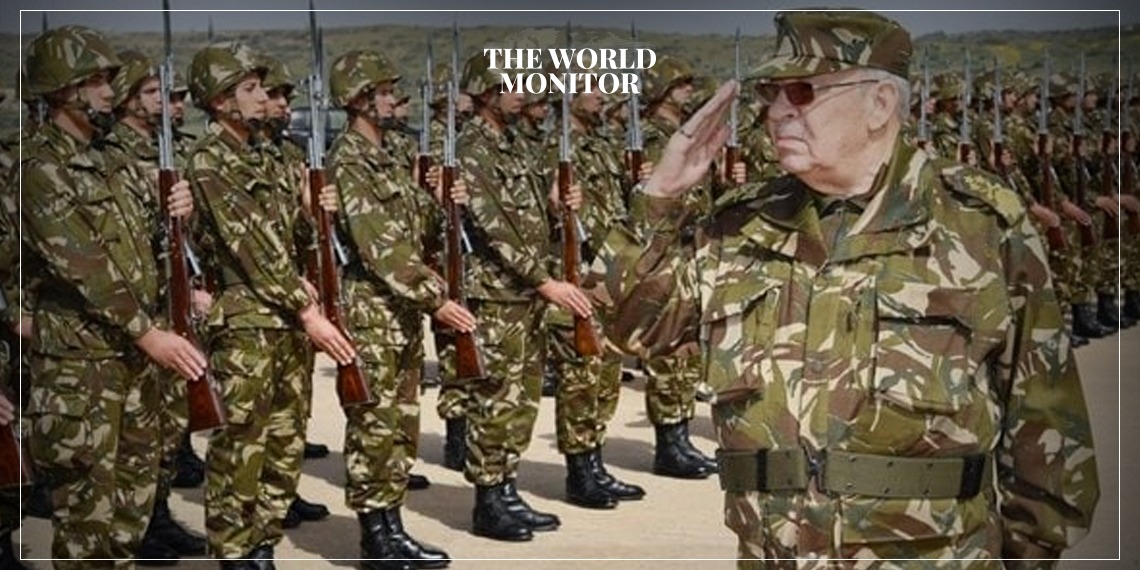
Algerian National Army forces have arrested 15 support elements for terrorist groups during separate operations across the country from March 13 to 19.
According to a statement from the Algerian army, army detachments in Bordj Badji Mokhtar also arrested the terrorist “Rikan Safah,” who had been active within terrorist groups abroad.
Additionally, 27 drug traffickers were arrested, and attempts to smuggle 546 kilograms of processed cannabis across the border with Morocco were thwarted, along with the seizure of 9,586 psychotropic tablets.
On another front, coast guards thwarted illegal migration attempts along the national coastlines, rescuing 355 individuals on traditional boats, and arrested 1,551 illegal migrants of various nationalities within the national territory.
The background of terrorism in Algeria is deeply intertwined with the country’s political and social history, particularly during the tumultuous period known as the “Black Decade” in the 1990s. The conflict began in late 1991 after the military canceled the parliamentary elections that the Islamic Salvation Front (FIS) was poised to win, leading to a violent insurgency led by the Armed Islamic Group (GIA) and later the Salafist Group for Preaching and Combat (GSPC), which had ties to al-Qaeda.
In the 2000s, the Algerian government launched aggressive counterterrorism efforts, leading to a significant reduction in terrorist activities. The GSPC, later known as Al-Qaeda in the Islamic Maghreb (AQIM), continued to pose threats but with diminished capacity compared to its peak during the 1990s. Algeria’s counterterrorism strategies have evolved to include not only military operations but also counter-extremism efforts focusing on preventing the spread of extremist ideologies.
In recent years, Algeria has been recognized as a key counterterrorism partner in the region, having successfully limited the number of its citizens joining foreign jihadist fronts and continuing to combat internal extremist threats. However, the Sahel region’s ongoing instability poses a challenge to Algeria’s security, with the potential for spillover effects from neighboring countries where terrorist groups like AQIM and ISIS operate.
The situation in Algeria and its neighboring regions underscores the complex dynamics of counterterrorism, where military action, ideological combat, regional cooperation, and internal political stability all play crucial roles in preventing terrorism.